Course overview
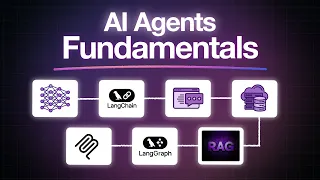
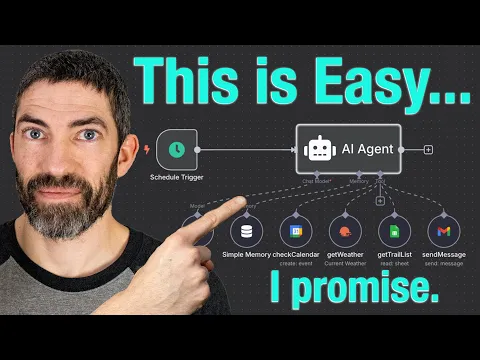
This course provides a structured path from understanding what AI agents are to building and deploying them. It clarifies the difference between generative AI, agentic AI, and autonomous agents. You will learn the fundamental agent anatomy including the brain, memory, and tools, along with design patterns like reflection, planning, and the observe-think-act loop. The curriculum covers practical implementation with no-code platforms like n8n and coding frameworks like LangChain, integrating APIs, webhooks, and the Model Context Protocol. You'll explore advanced concepts such as Retrieval-Augmented Generation, multi-agent orchestration, state management, and deploying production-ready automations, moving well beyond the capabilities of a standard chatbot.
Who this course is for
This course is designed for absolute beginners, entrepreneurs, and developers who want to leverage AI agents without prior programming experience. It is ideal for those seeking to automate complex business workflows, build custom AI solutions, or explore the commercial potential of agent deployment. If you understand the value of automation but feel blocked by technical jargon, this sequence of lessons provides a straightforward entry point using no-code tools like n8n. For those with some python experience, dedicated sections cover building agents from scratch using LangChain and Claude's API to create custom, structured solutions.
How to study this sequence
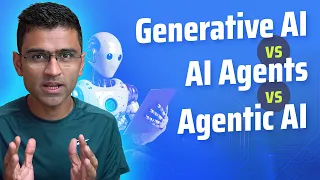
Begin with the fundamentals by watching the first lessons to ground yourself in what distinguishes an agent from a simple automation or chatbot. The course is sequenced to introduce core theory before diving into practice. Start with the no-code n8n tutorials to build your first working agent immediately, gaining tangible confidence. Then, progress to the more in-depth Python and LangChain sections to understand programmatic control. Refer to the comparative lessons on generative AI versus agentic AI whenever you need clarity on how these systems relate. For the deepest learning, actively code along with the demonstrations to encounter and resolve real-world implementation challenges.
What you should be able to do
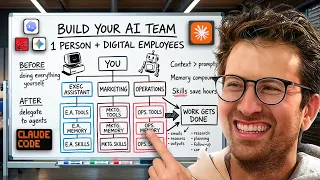
By completing this course, you will have built multiple functional AI agents using both no-code and code-based approaches. You will be able to articulate the architecture of an agent, design a system prompt, connect tools like APIs and Google Sheets, and implement a RAG pipeline. You will move from a theoretical understanding to practical skill, capable of selecting the right platform, debugging workflows, and architecting simple multi-agent systems. The final result is a portfolio of autonomous workflows that demonstrates your ability to design solutions for real-time adaptation and multi-step problem solving.