Course overview
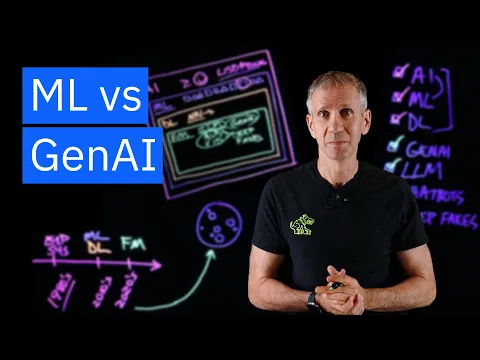
This course provides a structured journey through the core layers of artificial intelligence. You will begin by clarifying the distinctions between AI, Machine Learning, Deep Learning, and Generative AI with IBM, establishing a critical foundation. The path then delves into Harvard University's comprehensive CS50 course, where you will implement search algorithms, Bayesian networks, and neural networks using Python, TensorFlow, and PyTorch. The second half shifts focus to autonomous systems, moving from monolithic models to compound AI agents. You will explore agent architectures, the ReAct framework, and Retrieval-Augmented Generation before receiving practical guidance from Microsoft on building and deploying multi-agent systems using LangChain and Semantic Kernel.
Who this course is for
This course is designed for aspiring developers and technical professionals who want a complete conceptual and practical understanding of modern AI. It suits those who are confused by industry terminology and need clear boundaries between Deep Learning, LLMs, and AI agents. If you are a Python programmer looking to transition from basic scripting to implementing search algorithms or neural networks, Harvard's detailed instruction will serve you well. The agent-focused modules are ideal for engineers evaluating frameworks like AutoGen for production systems, while managers will benefit from learning to distinguish true autonomous agents from simple AI workflows in real-world contexts.
How to study this sequence
Follow the sequence linearly to build your knowledge logically. Start with the IBM overview to map out how Machine Learning, Generative AI, and Deep Learning relate. Move to Harvard's CS50 for a deep technical dive, actively coding the graph search algorithms, classifiers, and transformers in Python to solidify the concepts. Transition to AI Agents by first understanding the theory of compound systems and tool integration in the third video, then use the fourth lesson to clearly distinguish between standard LLM workflows and true autonomous reasoning with the ReAct framework. Finally, apply the Microsoft beginner course to explore hands-on implementation with agentic RAG and multi-agent design patterns.
What you should be able to do
By completing this sequence, you will gain the ability to accurately differentiate between Generative AI, LLMs, and autonomous agents. You will have hands-on experience implementing fundamental algorithms like probabilistic inference and neural network training in Python. The course demystifies the evolution from static chatbots to dynamic agentic systems capable of tool use and adaptive decision-making. You will finish with a practical roadmap for building agentic RAG systems and evaluating agent frameworks, giving you the vocabulary and technical insight needed to navigate current AI development trends confidently.


