Learn Devin AI in English with tutorials that explain autonomous software engineering agents, onboarding, practical coding tasks and realistic AI development workflows.
Master Devin AI: From Setup to Autonomous Coding Workflows
Discover how Devin AI transforms software engineering by automating code generation, debugging, and deployment. These tutorials guide you through setup, agentic workflows, and real-world applications of this autonomous AI coding assistant for modern development teams.
Content selected to progress from foundational Devin AI concepts through autonomous agent reasoning and practical integration into your development pipeline, emphasizing hands-on workflows and decision-making patterns.
 7min
EN
7min
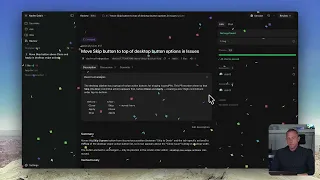
ENGetting Started with Devin in 8 Minutes
 20min
EN
20min
ENDevin AI Explained for Beginners (AI Coding Assistant for Software Engineers)
 38min
EN
38min
ENDevin AI Is the Future of Coding… Full Tutorial
 8min
EN
8min
ENDevin AI Tutorial – 2026 | How to Use Devin AI? (Step-by-step Guide)
 13min
EN
13min
ENDevin in 14 Minutes: The Autonomous Software Engineer
 11min
EN
11min
ENHow To Use Devin AI For Agentic Coding
Frequently asked questions about Devin AI
How should I start learning Devin AI?
Start with the beginner-friendly tutorials, then follow the path in order. This topic favors practical videos that help you build, configure, or publish something real.
Are these videos current?
The selected tutorials were checked against a 2025/2026 freshness window whenever possible, plus embed availability and social proof.
Does this topic include a free course?
This batch publishes a focused topic and a guided path. A separate course is only created when there is a cohesive course-style playlist or long class worth promoting as a course.
Are the tutorials in English?
Yes. This English topic uses English-language videos and marks both the publication and the videos with the English language taxonomy.
Can beginners use this topic?
Yes. The path starts with beginner-friendly material and then adds intermediate videos when the workflow needs more context.
Why are some videos official and others from creators?
Official videos are useful for product context, while independent tutorials often show practical workflows, mistakes and real project decisions.
How does Cursob choose the video order?
The order starts with setup or overview material, then moves toward hands-on practice, longer classes and more specific workflows.
Should I watch every video?
Use the full path if you are new to the tool. If you already know the basics, jump to the videos that match your current project.
Do I need a paid account for Devin AI?
Some tools may require an account or paid plan for specific features. The topic focuses on learning workflows, not guaranteeing free access to every feature.
How often should this topic be refreshed?
Digital tools change quickly, so the topic should be reviewed when major product updates, pricing changes or new official workflows appear.
How to study Devin AI with context
This initial text is replaced by a specific section generated through the Anthropic/Claude API from the tutorials published in this topic.
Curated learning flow
The selection favors hands-on tutorials, official guidance where useful, and practical workflows over news, speculation, or generic reviews.
Perguntas frequentes sobre Devin AI
How does Devin AI differ from traditional code completion tools like GitHub Copilot?
Devin AI operates as a full autonomous agent rather than a suggestion-based assistant. While Copilot offers code snippets and autocomplete, Devin understands entire projects, plans complex tasks, executes code changes, debugs independently, and manages dependencies with minimal human intervention. This agent-based approach enables project-level reasoning and multi-step task execution that traditional completion tools cannot achieve.
What does human-in-the-loop workflow mean when using Devin AI for development?
Human-in-the-loop means you maintain oversight and control while Devin handles autonomous execution. You provide high-level requirements or prompts in natural language, Devin executes the coding tasks, and you validate results, provide feedback, or adjust direction as needed. This collaborative model preserves developer judgment while leveraging Devin's autonomous capabilities for efficiency.
Can Devin AI handle debugging and error resolution autonomously during development?
Yes, Devin AI includes autonomous debugging capabilities. It can identify code errors, analyze failure patterns, propose fixes, and execute corrections within iterative cycles. This automated debugging reduces manual troubleshooting time and allows developers to focus on architecture and design rather than repetitive error resolution.
How does Devin AI understand and work within existing codebases and project context?
Devin AI performs project-level code analysis to understand architecture, dependencies, coding standards, and existing patterns. It leverages large language models combined with codebase comprehension to maintain consistency with your project structure. This contextual awareness enables it to make informed decisions about code generation and modifications aligned with your project's specific requirements.
What role does natural language prompt engineering play in maximizing Devin AI's autonomous capabilities?
Natural language prompts are the primary interface for directing Devin's autonomous execution. Well-crafted prompts that clearly specify task scope, desired outcomes, and context constraints enable Devin to plan and execute more effectively. Advanced prompt engineering techniques help maximize Devin's potential for complex multi-file refactoring and feature development tasks.
How can Devin AI be integrated into existing CI/CD pipelines and development workflows?
Devin AI integrates with CI/CD systems through API connections and IDE integration points. It can automate code validation, testing, and deployment stages within your pipeline. This integration transforms development workflows by automating routine tasks, enabling faster iteration cycles, and reducing manual intervention in deployment processes.
What are the key agentic patterns for chaining multiple Devin AI tasks together?
Agentic patterns involve structuring tasks so Devin can execute them sequentially with output from one task feeding into the next. For complex feature development, you might chain task planning, dependency analysis, code generation, testing, and validation stages. Understanding these patterns enables sophisticated workflows like system-wide refactoring and multi-component feature development.
How does Devin AI handle dependency management and package installation autonomously?
Devin AI comprehends project dependencies through package manager files and version control systems. It can analyze dependency requirements, identify version conflicts, install packages, and update configurations autonomously. This capability eliminates manual dependency management overhead while ensuring project stability and compatibility.
What are the limitations and scenarios where manual developer intervention is still necessary with Devin AI?
While Devin operates autonomously, manual intervention remains critical for architectural decisions, complex business logic specification, security-sensitive operations, and validation of AI-generated decisions. Developers should review Devin's work, validate generated code against requirements, and maintain oversight of critical system changes to ensure quality and compliance.
How does Devin AI's code generation approach differ when handling multi-file refactoring versus single-file modifications?
Multi-file refactoring requires higher-level reasoning about dependencies, cross-module impacts, and consistency across the codebase. Devin's autonomous agent capabilities enable it to track changes across multiple files, maintain referential integrity, and ensure refactoring maintains functionality. Single-file modifications require less contextual reasoning, making them simpler autonomous tasks.
Understanding Devin AI: Autonomous Agent Architecture and Practical Implementation
Devin AI represents a fundamental shift in development assistance by introducing true autonomous agent capabilities to software engineering. Unlike traditional code completion tools that operate reactively, Devin functions as an independent agent capable of understanding project requirements, planning solutions, executing code changes, and debugging issues with minimal human supervision. This deep exploration examines the architectural foundations, agentic reasoning patterns, and practical implementation strategies that enable developers to effectively leverage autonomous coding workflows.
The Autonomous Agent Model: Beyond Code Completion
Devin AI's distinction lies in its agent-based architecture rather than suggestion-based assistance. Traditional tools like GitHub Copilot operate reactively, generating code snippets when prompted within an editor. Devin, developed by Cognition, operates proactively as an autonomous agent that can plan multi-step workflows, make independent decisions about code structure, and execute tasks across entire project codebases without continuous human direction. This agent model combines large language models with reasoning capabilities, enabling Devin to understand context at the project level rather than just at the cursor position.
The autonomous architecture enables Devin to handle real-world engineering challenges that involve complexity beyond simple code suggestions. When you provide a natural language prompt describing a feature or fix, Devin analyzes your codebase, identifies affected components, plans implementation steps, generates code, runs tests, and handles debugging cycles autonomously. This transformation from suggestion-based to execution-based assistance fundamentally changes development workflows, allowing developers to focus on architecture and validation rather than typing and routine implementation.
Codebase Comprehension and Project Context Awareness
Devin's ability to understand entire projects distinguishes it from line-level completion tools. When integrated into your development environment, Devin analyzes your codebase to understand architecture patterns, dependency structures, coding conventions, and existing implementations. This comprehension enables context-aware decision making, ensuring generated code aligns with your project's established patterns. The agent can identify how changes in one component affect others, maintaining consistency across multi-file modifications and refactoring operations. This project-level awareness prevents common issues where isolated changes break system-wide functionality or violate established patterns.
Implementation of codebase comprehension involves Devin accessing version control systems like Git to understand project history, file structure, and dependencies. The agent performs static analysis of code files to learn naming conventions, architectural patterns, and testing approaches already established in your project. When executing autonomous coding tasks, Devin references this learned context to make decisions that fit naturally within your existing system. This contextual grounding transforms Devin from a generic code generator into a specialized assistant that understands your specific project requirements and constraints.
Human-in-the-Loop Collaboration and Workflow Integration
Effective Devin AI implementation involves designing workflows where autonomous execution and human oversight work together. You specify high-level objectives through natural language prompts, allowing Devin to autonomously execute implementation details while you maintain decision-making authority over direction and validation. This human-in-the-loop model preserves developer judgment for critical decisions while leveraging Devin's speed for execution. During workflow execution, you can monitor Devin's progress, provide corrective feedback, or halt operations if the agent's approach diverges from your intentions. This collaborative model ensures that autonomous capabilities enhance rather than replace developer expertise.
Integration into existing development workflows requires thoughtful consideration of where autonomous execution adds value. Routine tasks like dependency management, bug fixes, code testing, and initial implementation are ideal for autonomous execution. Complex decisions involving architecture choices, security implications, or business logic specification benefit from developer oversight. IDE integration enables seamless workflow where you use Devin within your existing editor, maintaining context switching while gaining autonomous execution capabilities. This integration extends to version control, allowing Devin to create branches, manage commits, and prepare pull requests autonomously while keeping developers informed of changes.
Autonomous Debugging Cycles and Error Resolution
Devin's autonomous debugging capability transforms error resolution workflows. When code generation results in test failures or runtime errors, Devin can analyze error messages, trace issues to root causes, propose fixes, and re-execute code without waiting for developer intervention. This iterative debugging cycle continues until tests pass or the agent identifies issues requiring human judgment. Autonomous debugging dramatically reduces the time developers spend in repetitive troubleshooting, allowing them to address only complex errors that require domain expertise or architectural changes. The agent maintains context across debugging iterations, learning from previous attempts and adjusting approaches based on new information.
Implementation of autonomous debugging depends on integration with testing frameworks and execution environments. Devin can execute test suites, interpret failure outputs, and understand common error patterns across different programming languages and frameworks. The agent can make intelligent adjustments like fixing import statements, correcting type mismatches, addressing missing dependencies, or refactoring logic based on error analysis. However, developers should maintain oversight of autonomous debugging to catch cases where the agent fixes symptoms rather than root causes, or where changes introduce subtle behavioral changes. Combining autonomous debugging with code review practices ensures error resolution maintains quality standards.
Agentic Patterns for Complex Task Execution
Agentic patterns describe how to structure complex tasks so Devin can execute them autonomously across multiple steps. Rather than asking Devin to implement an entire feature in one prompt, sophisticated agentic patterns break tasks into structured sequences where outputs feed forward into subsequent steps. For example, complex refactoring might follow this pattern: analyze current code structure, identify affected components, create test coverage for affected areas, execute refactoring changes, run comprehensive tests, and validate against original requirements. Each step builds on previous context, allowing the agent to make informed decisions about subsequent actions. Understanding these patterns enables developers to design workflows where Devin handles multi-file refactoring, system-wide architectural changes, and sophisticated feature development.
Advanced agentic patterns leverage Devin's ability to chain tasks together with persistent context. The agent can maintain understanding of dependencies between tasks, backtrack if issues arise, and adjust subsequent steps based on earlier results. When integrated with CI/CD systems, agentic patterns enable automated code validation, testing, and deployment orchestration. Developers structure these workflows by clearly specifying task objectives, acceptance criteria, and constraints for each step. The agent then executes the workflow autonomously while maintaining developer visibility. Mastering agentic patterns transforms Devin from a tool for individual coding tasks into a system for orchestrating sophisticated development workflows.
CI/CD Pipeline Integration and Automated Governance
Devin AI's integration with continuous integration and continuous deployment pipelines enables automated code governance and deployment workflows. Rather than manually triggering tests and deployments, Devin can orchestrate these processes autonomously as part of structured task execution. When a developer requests feature implementation or bug fixes, Devin can generate code, execute local testing, commit changes with appropriate messages, create pull requests with documentation, and trigger CI/CD validation automatically. This integration compresses development cycles by eliminating manual handoff steps between code generation, testing, validation, and deployment stages. The agent can monitor pipeline outputs and make adjustments if tests fail or validation checks identify issues.
Implementation of CI/CD integration requires establishing clear contracts between Devin's autonomous execution and your pipeline governance. This includes defining which pipeline stages Devin can trigger autonomously, which require human approval, and which validation checks must pass before autonomous progression. The agent can be configured to respect code review policies, security scanning requirements, and compliance checks established in your organization. By automating routine pipeline operations while preserving human control over critical gates, you gain deployment velocity from autonomous execution while maintaining governance requirements. This approach transforms CI/CD from a manual process into an autonomous workflow orchestrated by Devin under developer oversight.
Prompt Engineering for Autonomous Agent Effectiveness
Natural language prompts are the primary interface for directing Devin's autonomous execution, making prompt engineering critical to effectiveness. Well-crafted prompts clearly specify task scope, desired outcomes, constraints, and contextual requirements that topic the agent's planning and execution. Rather than vague requests like implement feature X, effective prompts describe the specific functionality desired, how it should integrate with existing code, what testing should validate, and any performance or security constraints. Advanced prompt engineering techniques help developers provide sufficient specification for autonomous execution while avoiding over-constraining the agent's approach. Prompts that balance clarity with flexibility enable Devin to exercise autonomous judgment while staying aligned with developer intentions.
Mastering prompt engineering for complex tasks involves iterative refinement based on Devin's execution patterns. Developers observe how the agent interprets prompts, identifies where additional specification prevents misunderstanding, and structures subsequent prompts to topic Devin more effectively. Complex tasks like multi-file refactoring benefit from prompts that explicitly reference architectural patterns, existing conventions, and specific files requiring modification. Including acceptance criteria in prompts helps Devin understand when task execution is complete. Over time, developers develop domain-specific prompt patterns that reliably topic Devin toward desired outcomes for their specific projects and development styles.