A structured Python topic for learning programming fundamentals, CS50P lessons, beginner practice and the next steps toward automation, data and AI.
Python courses
View all →Python tutorials
All tutorials related to this topic, gathered in one place.
Criteria: same topic and editorial language. Tutorials are individual content and do not represent a required sequence.
 1h 45min
EN
1h 45min
ENPython Functions and Variables – CS50P Week 0
 56min
EN
56min
ENPython Conditionals – CS50P Week 1
 1h 20min
EN
1h 20min
ENPython Loops – CS50P Week 2
 44min
EN
44min
ENPython Exceptions – CS50P Week 3
 1h 17min
EN
1h 17min
ENPython Libraries – CS50P Week 4
 50min
EN
50min
ENPython Unit Tests – CS50P Week 5
 1h 32min
EN
1h 32min
ENPython File I/O – CS50P Week 6
 2h 05min
EN
2h 05min
ENPython Regular Expressions – CS50P Week 7
 2h 47min
EN
2h 47min
ENPython Object-Oriented Programming – CS50P Week 8
 2h 29min
EN
2h 29min
ENPython Et Cetera – CS50P Week 9
 18min
EN
18min
ENSend Emails with Python Step by Step
 9min
EN
9min
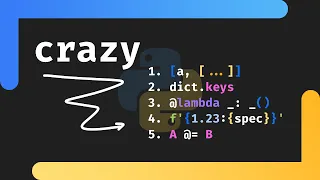
EN5 Crazy Python Features in Under 10 Minutes
 21min
EN
21min
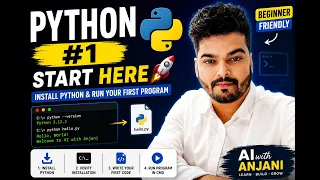
ENPython Tutorial #1 | Introduction, Installation & First Program | AI with Anjani
 23min
EN
23min
ENAgentic AI vs AI Agents vs Generative AI using Python Programming Tutorial: GPT 6 Astra
 5min
EN
5min
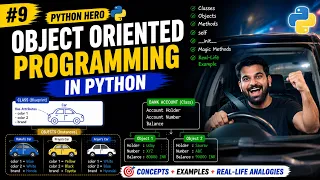
ENObject Oriented Programming in Python | Classes, Objects & Methods
 1h 58min
EN
1h 58min
ENSTOP Learning Python the Hard Way | Complete Beginner Tutorial!
 8min
EN
8min
ENBuild a Local AI Agent in 10 Minutes using Python
 4min
EN
4min
ENInstall & Run Python on Visual Studio Code | Python + VS Code Full Setup
 4min
EN
4min
ENPython Input and Output Explained for Beginners | Python Tutorial #4
 1h 24min
EN
1h 24min
ENComplete Python Course in One Shot | Python Tutorial in Just 1 Hour | Tpoint Tech
 5min
EN
5min
ENHow to Install Python 3.14.7 Latest Version on Windows 11 (2026) | Step by Step
 15min
EN
15min
ENSetup VS Code for Coding (Python & Java) — The Complete Tutorial
 37min
EN
37min
ENBuilding AI Agents in Pure Python – Beginner Course
 39min
EN
39min
ENPython Beginner Tutorial Part 1 – Setup & Your First Python Program
Frequently asked questions about Python
What is Python?
Python is a programming language often used for beginner programming, automation, data work, web back ends, scripting and artificial intelligence projects.
Is Python good for beginners?
Yes. Python has readable syntax and a large learning ecosystem, which makes it a practical first language for many students.
Does this topic include a full course?
When a course is available, it appears in the catalog. The topic can also include standalone tutorials and complementary lessons.
Can Python be used for AI?
Yes. Python is widely used in AI, machine learning, RAG, data processing and automation, but beginners should learn the language basics first.
Do I need math before learning Python?
Not for the first steps. Basic logic, variables, conditions and loops matter more at the beginning.
Should I learn Python or JavaScript first?
Choose Python if your priority is scripting, data, automation or AI. Choose JavaScript if your priority is web interactivity in the browser.
How should I practice Python?
Write small scripts, change examples, keep notes about errors and try to explain what each line does before moving to larger projects.
How to study Python without getting lost
Python is broad enough to lead into automation, data, web development and AI. The safest way to study it is to separate fundamentals from projects.
Start with the language
Before choosing a library or a large project, learn how Python handles values, variables, conditions, loops, functions, files and errors. These concepts appear in almost every practical use of the language.
A beginner path should make the student write code, run it, read errors and make small changes. Watching passively is useful for orientation, but Python becomes clearer when each lesson turns into a working script.
Use projects as checkpoints
Projects are useful after the basic flow is familiar. A calculator, a file organizer, a small data script or a simple automation can show whether the student understands the pieces or is only copying syntax.
Keep projects small at first. The goal is not to build something impressive immediately; it is to create feedback. A small script that you can explain is more valuable than a large project that only works when copied exactly.
Connect Python to adjacent topics
Once the foundation is stable, Python connects naturally with data analysis, RAG, LangChain, automation and AI workflows. Those subjects should be studied as extensions, not as replacements for the language basics.
Review before advancing
After each lesson, write down what the code did, what failed and what you changed. This habit turns errors into study material and helps you return to a topic later without starting from zero.
The best signal that you are ready to move forward is being able to explain the problem, the code structure and the expected output in plain language. When that is possible, the next topic becomes much easier to absorb.