Course overview
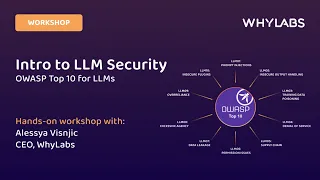
This course provides a structured entry point into AI agent security, starting with the fundamentals of prompt injection attacks and advancing through the OWASP Top 10 for Large Language Model applications. You will analyze attack vectors like data poisoning, excessive agency, and insecure output handling. The lessons guide you from theoretical vulnerability frameworks to practical demonstrations, including hands-on challenges like the Agent Breaker CTF, tutorials on hacking GPT-4, and comprehensive guides on architecting secure AI agents using governance frameworks and DevSecOps principles.
Who this course is for
This course is designed for developers, security engineers, and IT professionals who are moving into the AI security domain. It suits individuals familiar with basic cybersecurity concepts who now need to understand the unique attack surface of AI agents and large language models. Red teamers looking to specialize in AI, as well as architects and practitioners tasked with securely deploying LLM-based applications, will find direct, actionable methodologies to incorporate into their security assessments and development lifecycles.
How to study this sequence
Follow the lessons sequentially to build a coherent mental model of AI threats. Begin with introductory walkthroughs on prompt injection and AI hacking accessibility, then study the OWASP Top 10 for LLMs to categorize risks. Watch the longer, in-depth sessions on LLM security testing and penetration testing methodologies to connect theory with practice. Use the hands-on demonstrations as your lab by replicating exercises locally with Docker and Python, actively exploring the specific CTF challenges and adversarial prompting techniques shown.
What you should be able to do
You will be able to identify and explain the OWASP Top 10 risks for LLM applications. The course equips you to perform basic red teaming operations against AI agents, craft adversarial prompts to test safety guardrails, and reason about secure AI architecture. You will gain practical familiarity with running AI security challenges and applying defensive concepts like input sanitization, output validation, and role-based access control for agent systems.