Course overview
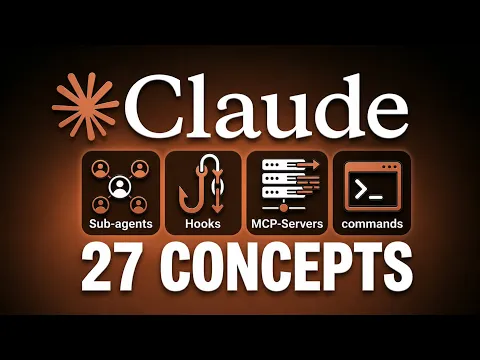
This course is a curated pathway through the most important Claude Code concepts, from foundational theory to advanced multi-agent orchestration. You will begin by understanding the architecture, context windows, and the WAT framework before diving into practical best practices from Anthropic. The middle modules focus on optimization and secret techniques, including 18 token hacks and advanced custom slash commands. Finally, you will explore building autonomous agent teams, configuring Model Context Protocol (MCP) servers, and integrating tools like GitHub and Playwright to transform Claude Code into a complete AI engineering partner for large-scale projects.
Who this course is for
This learning path is designed for developers, AI automation engineers, and technical creators who want to move beyond basic chat interfaces. If you are a beginner seeking a structured mental model for Claude Code, or a senior engineer looking to implement validation loops, agent teams, and persistent CLAUDE.md context files, this course meets you where you are. It is also highly relevant for anyone managing token costs, building custom MCP integrations, or orchestrating complex development workflows using modular AI specialization and adversarial idea testing.
How to study this sequence
Follow the course in sequence to build your knowledge layer by layer. Start with Simon Scrapes and Nate Herk’s foundational breakdowns to establish core terminology and mental models. Progress to Anthropic’s official best practices and Tech With Tim’s deep dive into MCP and custom skills. Pay special attention to Maddy Zhang and Sabrina Ramonov’s modules for practical, copy-paste workflow improvements. Conclude with the advanced lectures on agent teams and the essential 12-hour deep dive from freeCodeCamp, actively coding along to cement secure, autonomous development patterns.
What you should be able to do
By completing this course, you will have a robust, operational understanding of Claude Code that goes far beyond single-prompt interactions. You will be able to configure persistent project context, build custom slash commands and skills, and orchestrate agent teams that handle specialized roles in parallel. You will gain practical fluency in token optimization, MCP server deployment, and validation loops, enabling you to self-correct code efficiently and integrate Claude Code deeply into professional development environments and CI/CD pipelines.