-
02
 CS50x 2026 – Lecture 0 – Scratch
2h 00min
CS50x 2026 – Lecture 0 – Scratch
2h 00min
-
03
CS50x 2026 – Lecture 1 – C
2h 30min
-
04
CS50x 2026 – Lecture 2 – Arrays
2h 25min
-
05
CS50x 2026 – Lecture 3 – Algorithms
1h 59min
-
06
CS50x 2026 – Lecture 4 – Memory
2h 19min
-
07
CS50x 2026 – Lecture 5 – Data Structures
2h 06min
-
08
CS50x 2026 – Lecture 6 – Python
2h 29min
-
09
CS50x 2026 – Lecture 7 – SQL
2h 15min
-
10
CS50x 2026 – Artificial Intelligence
47min
-
11
CS50x 2026 – Lecture 8 – HTML, CSS, JavaScript
2h 22min
-
12
CS50x 2026 – Lecture 9 – Flask
2h 26min
-
13
CS50x 2026 – Lecture 10 – The End
Current lesson
Summary
Introduction to CS50's Closing Lecture
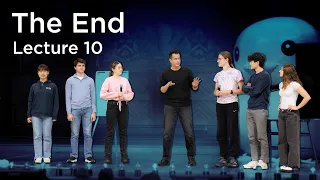
CS50 Lecture 10 serves as the concluding session of Harvard University's renowned introduction to computer science course. This final lecture, delivered by David J. Malan, encapsulates the core philosophy and intellectual journey students have undertaken throughout the semester. Rather than introducing entirely new programming concepts, this lecture focuses on reinforcing foundational thinking patterns and celebrating the intellectual achievements of the course. The fifty-two minute presentation combines traditional lecture components with interactive elements designed to engage students and leave a lasting impression about the nature of computational thinking and problem-solving in computer science.
Understanding Computational Thinking
The heart of this lecture centers on computational thinking, a fundamental concept that transcends specific programming languages or technologies. Computational thinking represents a way of approaching problems by breaking them down into manageable components, recognizing patterns, and developing systematic solutions. Through various examples and discussions, Malan illustrates how this mindset applies not only to programming but to everyday problem-solving scenarios. The lecture emphasizes that computer science is fundamentally about solving problems efficiently and elegantly, regardless of whether one uses Python, C, SQL, or any other tool. This philosophical grounding ensures that students understand they have learned a way of thinking, not merely syntax or technical procedures.
Recap of Core Concepts
The recap section of the lecture systematically reviews the major topics covered throughout the CS50 curriculum. This includes foundational concepts like data structures, algorithms, databases, web development, and artificial intelligence. By revisiting these areas, students gain perspective on how different topics interconnect and build upon one another. The recap serves as both a reinforcement mechanism and an opportunity for learners to appreciate the breadth of computer science. Understanding how these domains relate helps students recognize patterns in problem-solving approaches and prepares them for independent learning and specialization in their chosen areas of interest.
Interactive Charades and Engagement
One of the unique elements of this final lecture is the inclusion of charades, a playful yet pedagogically purposeful interactive activity. Charades in an educational context serves multiple functions: it provides a mental break from dense technical content, encourages active participation, and often reveals creative interpretations of complex concepts. This segment demonstrates Malan's teaching philosophy that computer science education should remain engaging and even enjoyable. The interactive nature reminds students that problem-solving and communication are central skills in computer science, and sometimes the most complex ideas can be simplified or represented in unconventional ways.
Looking Ahead Beyond the Course
The "Looking Ahead" section addresses the natural question every student faces: what comes next after completing an introductory computer science course? This portion provides guidance on potential specialization paths, career opportunities, and resources for continued learning. Students are encouraged to consider areas such as artificial intelligence, cybersecurity, software engineering, data science, or other emerging fields. Importantly, Malan contextualizes the course as a foundation—a springboard rather than a destination. The lecture emphasizes that CS50 has equipped students with thinking patterns and fundamental knowledge necessary to tackle more advanced topics, whether through academic continuation, professional development, or self-directed learning.
Quiz Show Finale
The lecture concludes with a quiz show format, transforming assessment into entertainment. Rather than a formal examination, the quiz show celebrates what students have learned through a game-show atmosphere. This approach reinforces key concepts while maintaining an enjoyable and memorable experience. The quiz format also provides immediate feedback and demonstrates the breadth of topics covered, from basic programming principles to more advanced applications. This finale exemplifies the balance CS50 maintains between rigorous intellectual content and engaging pedagogy, leaving students with positive associations about learning computer science.
The Broader Message of CS50
Ultimately, this final lecture encapsulates CS50's overarching mission: to teach students how to think computationally and problem-solve systematically. The course is not simply about programming syntax or specific technologies; it is about developing a mindset applicable across disciplines and career paths. By the conclusion of this lecture, students should understand that computer science is an intellectual enterprise—a way of approaching challenges that creates opportunities for innovation and impact. The availability of the course across multiple platforms (edX, Harvard Extension School, Harvard Summer School, and OpenCourseWare) underscores the democratization of computer science education and CS50's commitment to making this knowledge accessible globally.
What you will learn
- Understand computational thinking as a universal problem-solving framework
- Recognize how programming languages and tools serve as vehicles for computational ideas
- Connect foundational CS50 concepts across data structures, algorithms, and applications
- Identify pathways for specialization and advanced study in computer science
- Develop persistence and creativity in approaching complex technical challenges
Concepts covered
Technologies used
Chapters 7 markers
Next suggested video
Reviews
No reviews yet. Be the first to rate this lesson.