-
01
 become an AI HACKER (it’s easier than you think)
16min
become an AI HACKER (it’s easier than you think)
16min
-
02
What Is a Prompt Injection Attack?
10min
-
03
Mastering LLM Security Testing: A Comprehensive Guide
1h 53min
-
04
Hacking LLMs Demo and Tutorial (Explore AI Security Vulnerabilities)
26min
-
05
Explained: The OWASP Top 10 for Large Language Model Applications
14min
-
06
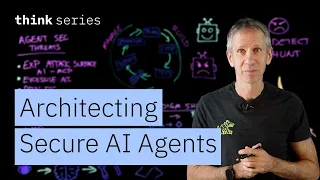
Guide to Architect Secure AI Agents: Best Practices for Safety
Current lesson
-
07
AI Red Teaming: A Developer’s Guide to LLM Security
8min
-
08
Intro to LLM Security – OWASP Top 10 for Large Language Models (LLMs)
57min
-
09
How to Pentest LLMs Like a Security Researcher Cybersecurity
1h 43min
-
10
Red Teaming AI: OWASP LLM Top 10 with Brian and Derek
1h 07min







Summary
Introduction to AI Agent Security
Artificial intelligence agents are becoming increasingly powerful tools for organizations seeking to automate complex tasks and streamline operations. However, with this power comes significant responsibility and considerable risk. The creation and deployment of AI agents without proper security measures can expose systems to various vulnerabilities, from prompt injection attacks to unauthorized data access. Understanding how to architect secure AI agents is therefore not just a technical best practice, but a critical necessity for any organization leveraging generative AI technologies. This comprehensive guide explores the foundational principles and actionable strategies required to build AI agents that are both powerful and protected.
Governance as the Foundation
Effective AI agent security begins with robust governance frameworks that establish clear policies, procedures, and accountability mechanisms across the entire organization. Governance serves as the backbone that ensures all stakeholders understand their responsibilities and the expected standards for AI implementation. Without proper governance, security measures become inconsistent and difficult to enforce, leaving gaps that malicious actors can exploit. A solid governance structure includes documented policies for AI agent development, deployment, monitoring, and retirement. It establishes clear decision-making hierarchies and ensures that security considerations are integrated from the initial design phase rather than bolted on as an afterthought. Organizations must define who has authority to approve new agents, how agents are tested before deployment, and what happens when security incidents occur.
Role-Based Access Control Implementation
Role-Based Access Control, commonly referred to as RBAC, represents a critical component of any secure AI agent architecture. RBAC operates on the principle of least privilege, where users and systems are granted only the minimum permissions necessary to perform their intended functions. When applied to AI agents, RBAC ensures that an agent cannot access sensitive data or perform actions beyond its designated scope. For example, a customer service agent should not have access to financial records or administrative functions. Implementing RBAC requires careful analysis of what each agent needs to accomplish and restricting its access accordingly. This includes controlling which databases the agent can query, which APIs it can call, and what user information it can process. RBAC also extends to human operators managing the agents, creating separation of duties where no single person has complete control over critical agent operations.
DevSecOps Principles for AI Agent Development
DevSecOps integrates security practices into every stage of the software development lifecycle, from initial design through deployment and maintenance. Applied to AI agents, DevSecOps ensures that security is not an isolated concern but rather a continuous process embedded in development workflows. This means implementing automated security testing, code reviews focused on vulnerability identification, and continuous monitoring of deployed agents. DevSecOps practices include conducting threat modeling early in the design phase, performing regular security audits of agent code and configurations, and maintaining detailed logs of agent activities for forensic analysis. Automation plays a crucial role, allowing teams to identify vulnerabilities quickly before agents reach production environments. This approach significantly reduces the window of opportunity for attackers and ensures that security issues are addressed proactively rather than reactively.
Mitigating Prompt Injection Attacks
Prompt injection represents one of the most significant and sophisticated threats facing modern AI agents. These attacks involve crafting malicious inputs designed to manipulate the agent's behavior, bypassing intended constraints or revealing sensitive information. A well-executed prompt injection might trick an agent into ignoring its original instructions and executing unintended actions. Defending against prompt injection requires multiple layers of protection. Input validation and sanitization ensure that user prompts are examined and cleaned before processing. Techniques include filtering for known attack patterns, limiting prompt length, and using specialized models trained to detect injection attempts. Additionally, agents should be designed with clear operational boundaries and instructions that explicitly prevent them from following conflicting commands. Regular testing and adversarial prompt testing help identify vulnerabilities before they can be exploited in production environments.
Data Protection and Leak Prevention
AI agents frequently handle sensitive customer data, proprietary information, and confidential business intelligence. Protecting this data from unauthorized access or leakage is paramount. Data protection strategies include encryption of data both in transit and at rest, implementing data masking techniques to obscure sensitive information in logs and error messages, and limiting agent access to only necessary data fields. Organizations should also implement data retention policies that ensure sensitive information is not stored longer than required. Regular audits of data access patterns can reveal unusual behavior that might indicate a security breach. Additionally, agents should be designed to minimize the amount of sensitive data they process or store, delegating this responsibility to secure backend systems whenever possible. Employee training on data protection principles and regular security awareness programs ensure that human operators also understand their role in maintaining data security.
Monitoring and Incident Response
Deploying security measures is only the first step; continuous monitoring ensures that those measures remain effective and that threats are detected quickly. Comprehensive logging of agent activities provides visibility into what each agent does, who accessed it, and what decisions it made. Real-time monitoring systems can detect anomalies that might indicate a security breach, such as unusual data access patterns or attempts to access restricted resources. Effective incident response procedures ensure that when security events occur, the organization can respond quickly and effectively. This includes isolating compromised agents, preserving evidence for investigation, notifying affected parties, and implementing remediation measures. Regular incident response drills and post-incident reviews help organizations improve their response capabilities and prevent similar incidents in the future.
Compliance and Regulatory Alignment
Modern AI agents must operate within increasingly complex regulatory environments that govern data privacy, algorithmic fairness, and AI safety. Understanding and implementing compliance requirements from regulations like GDPR, CCPA, and industry-specific standards is essential. Secure AI agent architecture includes mechanisms for auditing compliance, documenting decision-making processes, and demonstrating that appropriate safeguards are in place. Organizations must ensure that their AI agents respect user privacy rights, including the right to explanation and the ability to opt out of automated decision-making. Regular compliance reviews and third-party audits provide external validation that security and governance practices meet regulatory requirements. This proactive approach to compliance not only mitigates legal and financial risks but also builds customer trust.
Conclusion and Ongoing Evolution
Architecting secure AI agents is not a one-time effort but an ongoing process that evolves as threats emerge and technologies advance. Organizations that prioritize security from the design phase, implement comprehensive governance frameworks, leverage RBAC effectively, and embrace DevSecOps principles will be well-positioned to deploy powerful AI agents while maintaining robust protection against risks. The investment in secure architecture today prevents costly security incidents, regulatory penalties, and reputational damage tomorrow.
What you will learn
- Implement governance frameworks for AI agent development and deployment
- Apply Role-Based Access Control to restrict agent permissions appropriately
- Identify and mitigate prompt injection attack vulnerabilities
- Establish DevSecOps practices for continuous AI agent security
- Design data protection strategies to prevent unauthorized access and leaks
- Monitor AI agents and respond effectively to security incidents
Concepts covered
Technologies used
Chapters 8 markers
Next suggested video
Reviews
No reviews yet. Be the first to rate this lesson.