-
01
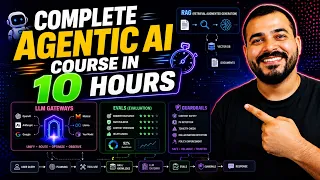
 Complete Agentic AI Course In 10 Hours- Langchain, Langgraph, RAG,Vectorless RAG, Guardrails,Evals
11h 13min
Complete Agentic AI Course In 10 Hours- Langchain, Langgraph, RAG,Vectorless RAG, Guardrails,Evals
11h 13min
-
02
LangSmith Tutorial – LLM Evaluation for Beginners
36min
-
03
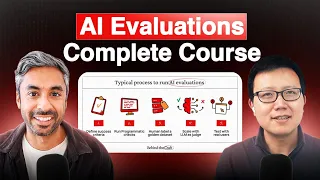
Complete Beginner’s Course on AI Evaluations in 50 Minutes (2025) | Aman Khan
51min
-
04
Guardrails with LangChain: A Complete Crash Course for Building Safe AI Agents
Current lesson
-
05
Guardrails for LLM Applications | Complete Tutorial for AI Developers WIth Guardrails AI
1h 26min
-
06
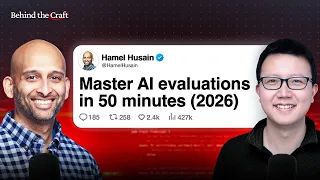
AI Evaluations Clearly Explained in 50 Minutes (Real Example) | Hamel Husain
52min
-
07
Are you still babysitting AI coding agents? Build better guardrails!
37min
-
08
LLM Evaluation – Build Reliable AI Apps | LLM evaluation metrics | LLM evaluation techniques
39min
-
09
A Practical Guide to LLM Evaluation – Michelle Yi
31min
-
10
How to Setup LLM Evaluations Easily (Tutorial)
17min






Summary
Understanding Guardrails in AI Systems
Guardrails represent a critical layer of safety and control in modern AI agent architectures. They function as boundary enforcement mechanisms that ensure AI systems operate within defined constraints, preventing harmful outputs, protecting sensitive data, and maintaining compliance with organizational policies. In the context of LangChain agents, guardrails serve multiple purposes: they filter malicious inputs before reaching the language model, validate and sanitize outputs before they reach users, and create checkpoints where human oversight can intervene when necessary. The importance of guardrails has grown exponentially as organizations deploy AI agents in sensitive domains like healthcare, finance, and customer service, where uncontrolled outputs could cause real harm or violate regulatory requirements.
The foundation of effective guardrail implementation lies in understanding that no single approach works universally. Different use cases require different protective mechanisms, and the most robust systems often employ multiple layers of guards working in concert. This multi-layered approach creates defense-in-depth, where if one guard fails or is bypassed, others remain in place to catch problems before they manifest to end users.
Deterministic vs Model-Based Approaches
When implementing guardrails, developers face a fundamental choice between deterministic and model-based methods. Deterministic approaches rely on explicit rules, pattern matching, and predefined logic to make decisions about whether content should pass through or be blocked. These methods are fast, predictable, and easy to audit—you can trace exactly why a decision was made. Keyword filtering provides the simplest example: if a list of forbidden terms appears in the input, the request is rejected. Regular expressions, allowlists, and blocklists all fall into this category.
Model-based guardrails, by contrast, leverage machine learning classifiers or language models themselves to detect problematic content. They excel at understanding context and nuance that deterministic rules might miss, such as identifying when a request is attempting to jailbreak the system through subtle language manipulation. However, they introduce latency, cost, and potential failure points. The optimal strategy often involves layering both approaches: use fast deterministic filters for obvious cases and reserve model-based detection for complex scenarios.
Built-In PII Detection Middleware
Personally Identifiable Information (PII) detection stands as one of the most critical guardrails in healthcare, financial, and legal applications. LangChain provides built-in middleware that automatically identifies and can mask or redact sensitive data patterns such as email addresses, phone numbers, social security numbers, and credit card information. This middleware operates transparently within the agent pipeline, scanning both user inputs and model outputs for PII before they're stored or transmitted.
The advantage of using built-in PII detection is that it requires minimal custom code and integrates seamlessly with existing LangChain workflows. Developers can configure sensitivity levels, specify which types of PII matter for their use case, and define how detected PII should be handled—whether it should be blocked, masked with placeholders, or logged for compliance purposes. When properly configured, PII detection middleware ensures that conversations remain compliant with regulations like HIPAA and GDPR without imposing excessive friction on legitimate use cases.
Human-in-the-Loop Approval Systems
Critical decisions in AI systems often require human judgment. Human-in-the-loop middleware creates checkpoints where the system pauses and requests human approval before proceeding. In a healthcare chatbot context, for example, if the agent attempts to recommend a medication change or provide sensitive medical information, the system can escalate the request to a qualified human reviewer. This approach combines the speed and availability of AI with the accountability and wisdom of human oversight.
Implementing human-in-the-loop guardrails involves defining which types of requests warrant escalation, creating appropriate notification systems, and designing UX that allows humans to review and approve or reject actions efficiently. LangChain's built-in middleware facilitates this by providing hooks where custom approval logic can be inserted into the agent execution pipeline. The challenge lies in calibrating sensitivity—too strict and the system becomes unusable; too lenient and safety benefits evaporate.
Custom Input Filtering Guardrails
Before-agent guardrails intercept user inputs before they reach the language model, providing the first line of defense against malicious or problematic requests. Custom input filtering allows developers to implement domain-specific logic tailored to their application. A healthcare chatbot might reject requests asking for illegal drug synthesis or diagnosis without proper context, while a financial advisor chatbot might block requests seeking help with insider trading.
Building custom input filters involves analyzing the request payload, extracting intent and entities, and applying business logic to determine whether the request should proceed. This might include checking against allowlists of acceptable actions, verifying that the user has appropriate permissions, or detecting patterns that suggest prompt injection attacks. The advantage of input-side guardrails is that they're often simpler to implement and faster to execute than post-generation validation, since they prevent wasteful LLM calls from ever happening.
Custom Output Safety Validation
After-agent guardrails validate and potentially modify outputs generated by the language model before they reach users. Even with careful prompting, LLMs can generate factually incorrect information, harmful advice, or outputs that violate organizational policies. Custom output safety validation catches these issues at the final checkpoint. A healthcare chatbot might verify that medication recommendations are from an approved formulary, that dosage suggestions fall within safe ranges, or that no treatment plans contradict patient history.
Implementing output validation requires parsing the generated response, extracting relevant claims or directives, and cross-referencing them against authoritative sources or business rules. This might involve calling external APIs to verify facts, querying databases to check consistency, or running the output through specialized classifiers trained to detect harmful advice. While output validation adds latency, it provides essential protection against the most harmful class of LLM failures.
Layered and Combined Guardrails Architecture
Production-grade guardrail systems rarely rely on a single protective mechanism. Instead, they implement layered defenses where multiple guards operate in sequence or in parallel. A comprehensive architecture might include deterministic input filtering to catch obvious attacks, PII detection to protect sensitive data, model-based jailbreak detection to catch sophisticated attacks, human-in-the-loop escalation for high-stakes decisions, and output validation to ensure factual accuracy and safety. Each layer serves a specific purpose and catches different categories of failure modes.
The art of guardrail design lies in arranging these layers efficiently. Early guards should be fast and cheap, filtering out obvious problems before expensive operations occur. Later guards can afford more latency since fewer requests reach them. Guards should be designed to fail safely—when in doubt, reject or escalate rather than proceed. This layered philosophy mirrors security best practices from network defense: perimeter filters, intrusion detection, logging, and incident response all work together to maintain system integrity.
Healthcare Chatbot Implementation
A healthcare chatbot demonstrates how guardrails come together in practice. Such a system must satisfy regulatory requirements (HIPAA compliance), safety requirements (no harmful medical advice), and user experience requirements (responsive and helpful). The guardrail stack for a healthcare chatbot typically includes input validation to ensure requests are medically appropriate, PII detection to protect patient privacy throughout the conversation, content filtering to prevent requests for controlled substances or procedures, output validation to verify that medical claims are evidence-based, and human escalation for requests requiring provider judgment. By the end of building this system, developers understand not just the mechanics of implementing individual guardrails but the integrated philosophy of building trustworthy AI agents.
What you will learn
- Understand the fundamental purpose of guardrails in AI agent safety and compliance
- Implement deterministic and model-based guardrail approaches for different use cases
- Build custom input filtering and output validation guardrails in LangChain
- Configure PII detection and human-in-the-loop approval middleware
- Design layered guardrail architecture for production healthcare applications
Concepts covered
Technologies used
Chapters 9 markers
- Introduction to guardrails and course overview
- What are guardrails and why do they matter
- Deterministic vs model-based approaches explained
- Built-in PII detection middleware in LangChain
- Human-in-the-loop approval middleware implementation
- Custom before-agent guardrails for input filtering
- Custom after-agent guardrails for output safety
- Layered guardrails and combined defense strategies
- Real-world healthcare chatbot implementation
Next suggested video
Reviews
No reviews yet. Be the first to rate this lesson.