-
01
 Complete Agentic AI Course In 10 Hours- Langchain, Langgraph, RAG,Vectorless RAG, Guardrails,Evals
11h 13min
Complete Agentic AI Course In 10 Hours- Langchain, Langgraph, RAG,Vectorless RAG, Guardrails,Evals
11h 13min
-
02
LangSmith Tutorial – LLM Evaluation for Beginners
Current lesson
-
03
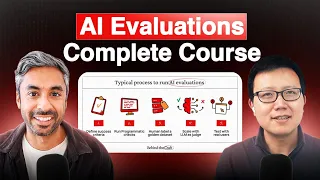
Complete Beginner’s Course on AI Evaluations in 50 Minutes (2025) | Aman Khan
51min
-
04
Guardrails with LangChain: A Complete Crash Course for Building Safe AI Agents
38min
-
05
Guardrails for LLM Applications | Complete Tutorial for AI Developers WIth Guardrails AI
1h 26min
-
06
AI Evaluations Clearly Explained in 50 Minutes (Real Example) | Hamel Husain
52min
-
07
Are you still babysitting AI coding agents? Build better guardrails!
37min
-
08
LLM Evaluation – Build Reliable AI Apps | LLM evaluation metrics | LLM evaluation techniques
39min
-
09
A Practical Guide to LLM Evaluation – Michelle Yi
31min
-
10
How to Setup LLM Evaluations Easily (Tutorial)
17min




Summary
Getting Started with LangSmith
LangSmith is a comprehensive debugging and evaluation platform designed specifically for developers working with large language models and LLM frameworks. Developed by the creators of LangChain, LangSmith provides essential tools for identifying errors, testing chains, evaluating performance, and monitoring intelligent agents in production environments. This tutorial serves as an accessible entry point for beginners who want to harness the power of LangSmith to improve their LLM applications, whether they're using LangChain or other frameworks. The platform addresses a critical gap in the LLM development workflow by offering centralized visibility into model behavior and application performance.
Understanding LangSmith's Core Purpose
At its foundation, LangSmith is built to solve common problems developers face when building LLM applications. Finding and fixing errors in complex chains can be tedious and time-consuming without proper tools. LangSmith streamlines this process by providing detailed logs, execution traces, and performance metrics for every interaction with language models. The platform becomes particularly valuable when working with multi-step chains or agents that make sequential decisions based on LLM outputs. By centralizing all this information, developers can quickly identify bottlenecks, unexpected model behaviors, or integration issues that might otherwise go unnoticed in production.
Integration with LangChain Framework
Since LangSmith is developed by the same team behind LangChain, the two tools integrate seamlessly. LangChain has become the preferred open-source framework for working with LLMs, offering a standardized approach to building chains, managing prompts, and orchestrating complex workflows. When used together, LangSmith and LangChain create a powerful development ecosystem where developers can prototype, test, and deploy LLM applications with confidence. This integration means that developers already working with LangChain can add LangSmith's monitoring and evaluation capabilities with minimal additional configuration or learning curve. The compatibility extends beyond mere data exchange; the tools are designed with each other's workflows in mind.
Testing and Evaluating LLM Chains
One of LangSmith's most valuable features is its ability to evaluate and test LLM chains systematically. Rather than relying on manual testing or subjective assessments, developers can define evaluation criteria and run comprehensive test suites against their applications. This capability becomes crucial when optimizing prompts, comparing different models, or assessing how changes to a chain might affect downstream performance. The platform supports various evaluation metrics and allows developers to track performance across different versions of their applications. Testing in LangSmith moves beyond simple pass-fail scenarios, enabling nuanced measurement of quality, correctness, and consistency in LLM outputs.
Debugging Agents and Complex Workflows
Intelligent agents that make decisions autonomously are increasingly common in LLM applications, but they introduce complexity that's difficult to debug without proper tools. LangSmith provides detailed execution traces that show exactly what an agent did at each step, what information it considered, and why it made particular decisions. This visibility is invaluable when an agent behaves unexpectedly or produces incorrect results. Developers can trace through the entire execution chain, examine the prompts sent to the model, review the model's responses, and understand how tool calls were made and interpreted. This level of transparency transforms debugging from a frustrating guessing game into a systematic investigation process.
Monitoring Production Performance
Beyond development and testing, LangSmith excels at monitoring LLM applications in production environments. As applications scale and real users interact with them, maintaining visibility into performance becomes critical. LangSmith tracks metrics like latency, error rates, and token usage across all LLM calls. It can surface patterns in failures or performance degradation, helping teams quickly identify when something requires attention. The monitoring capabilities support alerting and integration with existing observability infrastructure, making it possible to maintain reliability standards for LLM applications just as you would for traditional software systems. This production-focused perspective ensures that applications remain performant and reliable as they scale.
Practical Workflow and Use Cases
The tutorial emphasizes practical applications where LangSmith delivers immediate value. Development teams use it to collaborate more effectively, sharing execution traces and test results to discuss performance and improvements. QA teams use it to define and run comprehensive test suites before deployment. Operations teams use it to monitor applications in production and respond quickly to issues. Individual developers use it to understand why their chains behave certain ways and to iterate rapidly on improvements. The platform's flexibility supports both small experiments and large-scale enterprise deployments, making it relevant across different scales and contexts of LLM development.
What you will learn
- Set up and configure LangSmith for your first LLM project
- Debug and trace execution of LangChain chains and agents
- Evaluate and test LLM application performance systematically
- Monitor production LLM applications for errors and performance issues
- Collaborate with team members using shared traces and evaluation results
Concepts covered
Technologies used
Chapters 8 markers
Next suggested video
Reviews
No reviews yet. Be the first to rate this lesson.