-
01
 you need to learn MCP RIGHT NOW!! (Model Context Protocol)
38min
you need to learn MCP RIGHT NOW!! (Model Context Protocol)
38min
-
02
Model Context Protocol (MCP), clearly explained (why it matters)
20min
-
03
Claude’s Model Context Protocol is here… Let’s test it
Current lesson
-
04
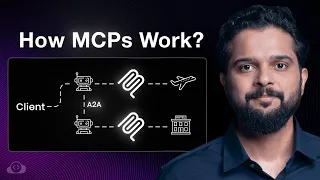
Model Context Protocol (MCP) Explained for Beginners: AI Flight Booking Demo!
24min
-
05
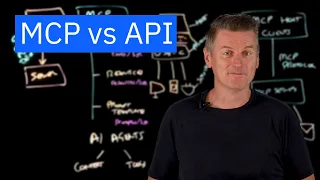
MCP vs API: Simplifying AI Agent Integration with External Data
13min
-
06
Why MCP really is a big deal | Model Context Protocol with Tim Berglund
11min
-
07
Model Context Protocol Clearly Explained | MCP Beyond the Hype
15min
-
08
MCP Tutorial: Build Your First MCP Server and Client from Scratch (Free Labs)
40min
-
09
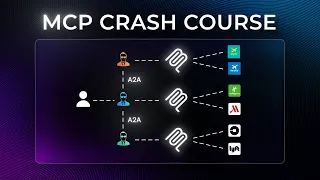
The Ultimate MCP Crash Course – Build From Scratch
1h 15min
-
10
Full Course (Lessons 1-11) MCP for Beginners
50min





Summary
Understanding the Model Context Protocol
Anthropric's Model Context Protocol (MCP) represents a significant advancement in how AI models interact with external systems and data sources. Rather than being confined to processing only the text input provided by users, models like Claude can now leverage additional context and capabilities through standardized protocol interfaces. The MCP framework enables developers to extend AI model functionality by creating servers that provide real-time data, system access, and the ability to perform actions beyond simple text generation. This tutorial explores the practical implementation of MCP using TypeScript, demonstrating how to build a custom server that seamlessly integrates with Claude and other AI models.
Building an MCP Server in TypeScript
The hands-on portion of this tutorial focuses on constructing a TypeScript-based MCP server from scratch. This server acts as a bridge between Claude and external data or systems, allowing the AI model to request information and trigger actions with precision. By following along with the code examples, developers learn how to structure an MCP server with proper endpoints, error handling, and protocol compliance. The TypeScript implementation provides type safety and modern JavaScript features that make development intuitive and maintainable. The server architecture follows Anthropic's specifications, ensuring compatibility with Claude and future AI models that support the MCP standard.
Granting Claude Additional Context
One of the primary benefits of the Model Context Protocol is the ability to provide Claude with contextual information beyond the immediate conversation. An MCP server can expose databases, APIs, file systems, or custom knowledge bases that the model can query on demand. This contextual awareness enables Claude to make more informed decisions, provide more accurate responses, and maintain consistency with external data sources. The tutorial demonstrates how to structure these context providers so that Claude automatically understands what information is available and when to request it. By effectively managing context delivery, developers ensure that their AI implementations remain accurate and grounded in real-world data.
Modifying Data Through AI Interactions
Beyond reading data, the MCP framework empowers Claude to modify information on the server based on user requests and logical inference. This two-way interaction model transforms AI from a passive information provider into an active agent capable of executing operations. The tutorial shows practical examples of how Claude can safely modify database records, update file contents, or trigger server-side actions through the MCP protocol. Proper validation, authorization checks, and error handling become critical when AI models have write access to systems, and the tutorial emphasizes secure implementation patterns that prevent unintended modifications or security vulnerabilities.
Real-World Applications and AI Superpowers
The concept of giving AI models superpowers through MCP extends far beyond simple demonstrations. Developers can build sophisticated AI agents that manage business processes, automate complex workflows, and integrate seamlessly with existing enterprise systems. By combining Claude's reasoning capabilities with MCP's structured data access, teams can create solutions that previously required custom integration code for each AI capability. The tutorial context suggests that these patterns enable rapid development of AI-powered applications that would be significantly more complex to build using traditional API integration approaches.
Protocol Standards and Interoperability
The Model Context Protocol is designed as a vendor-agnostic standard, meaning implementations created with MCP are not locked into Claude or Anthropic's ecosystem. While the tutorial demonstrates integration with Claude specifically, developers who adopt MCP standards position their servers to work with multiple AI models as the protocol gains adoption across the industry. This forward-thinking approach to protocol design encourages ecosystem development and reduces vendor lock-in concerns that often plague AI integrations. Understanding how MCP achieves this interoperability provides valuable insight into the future trajectory of AI model integration patterns.
Practical Development Workflow
The tutorial walks through the complete development lifecycle of an MCP server, from initial setup through testing and deployment. Developers learn how to structure their TypeScript project, define the server's capabilities in machine-readable format, and test interactions between their server and Claude. The Fireship teaching style emphasizes building actual working code rather than theoretical explanations, so viewers can immediately apply concepts to their own projects. The inclusion of free credits on Sevalla for deployment encourages hands-on experimentation beyond the tutorial scope, allowing developers to test their MCP servers in production-like environments.
What you will learn
- Understand the fundamentals of Anthropic's Model Context Protocol
- Build a functional MCP server using TypeScript
- Design context providers that deliver real-time data to Claude
- Implement safe data modification endpoints through MCP
- Deploy and test MCP servers in practical applications
Concepts covered
Technologies used
Chapters 6 markers
Next suggested video
Reviews
No reviews yet. Be the first to rate this lesson.