-
01
 Lesson 1 – n8n and AI Agents Automation Course
4min
Lesson 1 – n8n and AI Agents Automation Course
4min
-
02
Lesson 2 – n8n and AI Agents Automation Course
6min
-
03
Lesson 3 – n8n and AI Agents Automation Course
Current lesson
-
04
Lesson 4 – n8n and AI Agents Automation Course
3min
-
05
Lesson 5 – n8n and AI Agents Automation Course
9min
-
06
Lesson 6 – n8n and AI Agents Automation Course
7min
-
07
Lesson 7 – n8n and AI Agents Automation Course
2min
-
08
Lesson 8 – n8n and AI Agents Automation Course
5min
-
09
Lesson 9 – n8n and AI Agents Automation Course
4min
-
10
Lesson 10 – n8n and AI Agents Automation Course
6min
-
11
Lesson 11 – n8n and AI Agents Automation Course
9min
-
12
Lesson 12 – n8n and AI Agents Automation Course
7min
Summary
Understanding AI Agents in Modern Automation
The concept of an artificial intelligence agent represents a significant evolution from traditional automation. While standard workflows follow rigid, predefined paths, an AI agent is designed with a degree of autonomy, capable of perceiving its environment, making decisions, and acting to achieve specific goals. This lesson introduces the foundational theory behind these smart systems, setting the stage for practical implementation within the n8n environment. It shifts the perspective from purely reactive sequences to proactive, intelligent orchestration where the software can handle ambiguity and complexity.
The discussion centers on how these agents differ fundamentally from simple scripts or basic if-this-then-that logic. Traditional automation excels at repetitive, high-volume tasks with clear rules, but it breaks down when encountering unexpected inputs or novel situations. AI agents bridge this gap by incorporating reasoning capabilities, often through large language models, allowing them to interpret natural language instructions or analyze unstructured data. This ability to adapt and learn from interactions transforms them from mere tools into digital collaborators that can manage dynamic, multi-step processes without constant human intervention.
Core Components and Capabilities
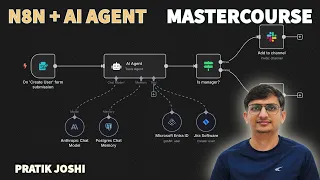
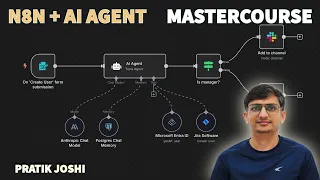
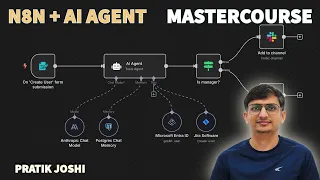
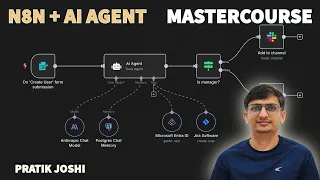
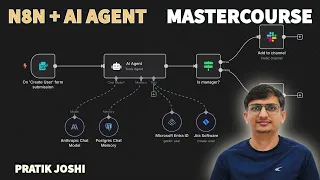
The architecture of an AI agent is built upon several key components that work in concert to deliver intelligent behavior. Central to its function is the reasoning engine, typically a large language model, which processes information and decides on the next course of action. Surrounding this core are the tools and integrations the agent can access, such as APIs, databases, or specific software functions, which allow it to execute tasks in the real world. Memory, whether short-term for a single conversation or long-term through persistent storage, enables the agent to maintain context and learn from past exchanges.
These components grant the agent a set of powerful capabilities that go far beyond what standard automation can offer. The ability to plan is critical, breaking down a complex, high-level objective into a sequence of smaller, manageable tasks. An agent can also use tools dynamically, selecting the right API or function based on the current context rather than a pre-mapped flowchart. Furthermore, it can engage in self-reflection and error correction, evaluating its own output, identifying mistakes, and iterating on a plan until it achieves a satisfactory result, a stark contrast to a traditional script that would simply fail or produce an incorrect output.
Transforming Industries and Workflows
The introduction of AI agents into professional ecosystems is fundamentally reshaping how industries operate. In customer service, they move beyond simple chatbots to handle complex inquiries, process refunds, and troubleshoot technical issues by interacting with multiple backend systems. They are not just answering questions but actively resolving them. In software development, agents can autonomously write, review, and debug code, acting as a tireless pair programmer that integrates directly with code repositories and CI/CD pipelines, drastically accelerating development cycles and reducing the cognitive load on engineers.
The transformation also extends into areas like sales, marketing, and operations. An AI agent can prospect for leads, research companies, draft personalized outreach emails, and even update CRM records, all while adhering to a specific strategy. Workflows become less about manual data transfer between applications and more about defining a goal and letting the agent navigate the tools to achieve it. This evolution promises to significantly reduce operational costs, enhance productivity by freeing human talent for strategic and creative endeavors, and enable a level of personalized customer interaction at scale that was previously impossible, making businesses more agile and responsive.
The Future-Ready Skill of Agent Building
Learning to construct and deploy AI agents is rapidly becoming an essential skill for forward-thinking professionals. The demand is shifting from knowing how to use individual tools to understanding how to orchestrate intelligent systems. Mastering this discipline involves a blend of systems thinking, prompt engineering, and API integration, positioning one at the forefront of the next wave of digital transformation. For those in automation roles, it’s a natural and necessary progression to remain relevant as the technology stack matures and client expectations evolve towards more sophisticated, natural interactions with automated services.
This skill set is valuable because it directly addresses the limitations of current business process automation. Being able to build a robust AI agent means being able to automate previously unautomatable tasks that require judgment, comprehension, or complex decision-making. As organizations seek to gain a competitive edge through efficiency and innovation, individuals who can design, test, and maintain these autonomous systems will be critical assets. This lesson makes a compelling case that investing in this knowledge is not just about learning a new feature, but about adopting a new paradigm for how work gets done in an increasingly AI-integrated world.
From Theory to Hands-On with n8n
This introductory video serves as the crucial conceptual pillar for the entire course, connecting abstract AI principles to a tangible, low-code platform. The groundwork is being laid for a direct application of these concepts using n8n, a tool renowned for its visual workflow automation capabilities. By first establishing a clear mental model of what an AI agent is and what problems it solves, the stage is set for a seamless transition into the builder interface where these theories will materialize into functional, testable nodes. The promise is a shift from passive learning to active creation.
The course structure hints at demystifying the complexity often associated with AI development by embedding it within a visual, intuitive environment. n8n acts as the connective tissue, allowing the agent’s brain to interact with hundreds of other applications. The upcoming hands-on lessons will demystify the process of wiring together the reasoning core, memory, and tools, empowering learners to create custom AI-powered systems tailored to their unique professional or personal challenges, effectively making advanced technology accessible to a much broader audience beyond just experienced programmers.
What you will learn
- Define AI Agents and differentiate them from traditional automation scripts
- Identify the core components of an AI agent, including reasoning engines and tool use
- Understand how memory and planning capabilities enable complex task execution
- Recognize the transformative impact of AI agents across various industries
- Prepare for the practical integration of AI agent logic within the n8n platform
Concepts covered
Technologies used
Chapters 5 markers
Next suggested video
Reviews
No reviews yet. Be the first to rate this lesson.