-
02
 Lesson 2 – n8n and AI Agents Automation Course
6min
Lesson 2 – n8n and AI Agents Automation Course
6min
-
03
Lesson 3 – n8n and AI Agents Automation Course
3min
-
04
Lesson 4 – n8n and AI Agents Automation Course
3min
-
05
Lesson 5 – n8n and AI Agents Automation Course
9min
-
06
Lesson 6 – n8n and AI Agents Automation Course
Current lesson
-
07
Lesson 7 – n8n and AI Agents Automation Course
2min
-
08
Lesson 8 – n8n and AI Agents Automation Course
5min
-
09
Lesson 9 – n8n and AI Agents Automation Course
4min
-
10
Lesson 10 – n8n and AI Agents Automation Course
6min
-
11
Lesson 11 – n8n and AI Agents Automation Course
9min
-
12
Lesson 12 – n8n and AI Agents Automation Course
7min
-
13
Lesson 13 – n8n and AI Agents Automation Course
11min
Summary
From Automation to Autonomous Agents
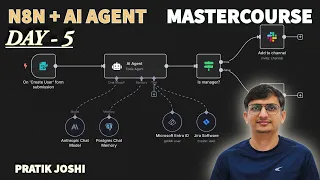
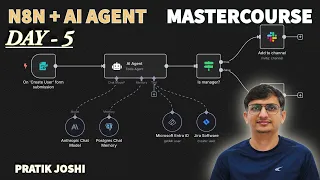
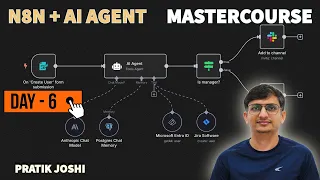
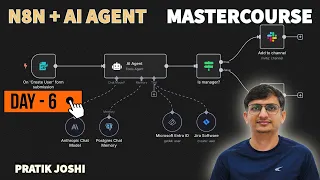
The leap from simple workflow automation to deploying autonomous AI agents represents a significant shift in how technical professionals approach problem-solving. This lesson, part of a comprehensive masterclass, guides learners through that exact transition. It does not merely theorize about artificial intelligence; it provides a concrete, executable blueprint for constructing a functional AI agent within the n8n environment. The session serves as a practical milestone, moving participants from the foundational concepts of n8n automation into the more dynamic realm of agentic systems that can reason, act, and manage tasks with a degree of independence.
The core value of this instruction lies in its immediate applicability. Instead of spending hours parsing abstract documentation, users are walked through a structured build process. The lesson demystifies the assembly of an agent by breaking it down into its fundamental components. Understanding how these pieces fit together within a visual workflow editor transforms a seemingly complex software engineering task into an accessible, logical sequence of steps. The emphasis on practical tips ensures that learners not only replicate a process but also grasp the principles of a smooth, error-free build, setting a strong foundation for more sophisticated configurations.
Dissecting the Anatomy of an Agentic Workflow
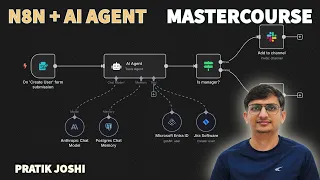
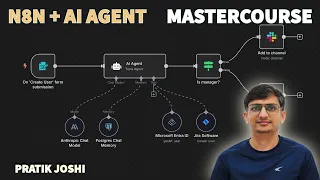
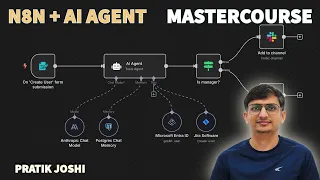
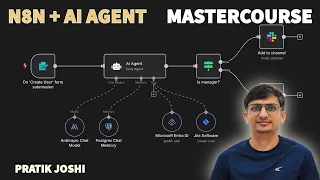
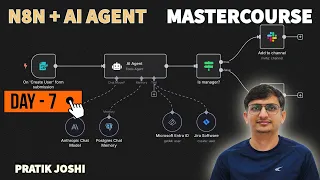
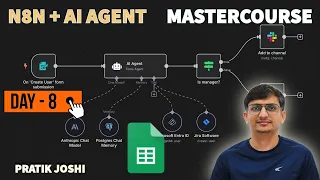
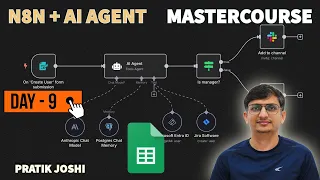
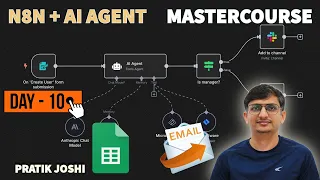
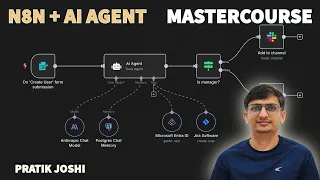
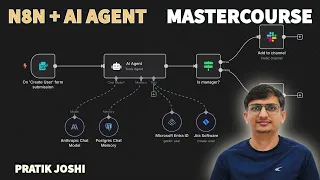
A central pillar of the instruction involves clarifying the key components that give an AI agent its capabilities. The lesson illuminates how n8n's native nodes act as the sensory and motor organs of the agent, connecting it to external services, databases, and communication platforms. More critically, it explains the integration of a Large Language Model as the agent's cognitive core. This connection is not just an API call; it is about structuring the prompt and context so the model can effectively decide which tool to use and how to analyze the data it receives.
The workflow examines the logic of decision-making nodes, which function as the agent's ability to branch and choose pathways based on dynamic inputs. By exploring these components in a hands-on manner, the lesson reveals the architecture of autonomous task completion. The agent, once activated, can intake a request, consult the language model for a plan, use configured tools to gather or process information, and deliver a final output without needing step-by-step human intervention. This dissection of the agent's "brain" and "body" is crucial for anyone looking to move beyond rigid scripts into intelligent process automation.
Ensuring Operational Reliability Through Testing
A distinct and valuable segment of the lesson is dedicated to testing and deployment best practices. Building an intelligent agent is only half the battle; verifying its reliability and managing its debut into a production-like environment are equally vital skills. The video addresses strategies for methodically testing the agent, ensuring it responds correctly to a variety of inputs and handles unexpected scenarios gracefully. This focus on validation emphasizes a professional, developer-oriented mindset, moving the project from a hobbyist experiment to a dependable business tool.
The guidance extends to the deployment phase, where considerations like error handling, feedback loops, and manual approval checkpoints can be integrated to make the agent robust. These practical tips on deployment are essential for mitigating the risks associated with autonomous systems, such as hallucinated actions or misinterpreted instructions. By showing how to layer testing mechanisms directly within the n8n workflow, the lesson empowers users to build trust in their automations, which is a prerequisite for scaling AI agents across an organization.
The Path to Advanced Automation Mastery
Far from being an isolated tutorial, this lesson is strategically positioned as a springboard into advanced capabilities. It marks Day 5 of a curated journey, designed to scale complexity at a manageable pace. The successful completion of this first agent build provides the psychological confidence and technical grounding needed to tackle more intricate multi-agent systems and complex logical routing covered later in the masterclass. The hands-on nature of the session ensures that the transition from following a recipe to independent creation becomes shorter and more intuitive.
Looking forward, the skills acquired here unlock the potential for automating entire categories of knowledge work. Participants can immediately start conceptualizing how to apply their new agent to parse emails, manage customer service inquiries, populate CRMs, or synthesize research reports. The inherent extensibility of the n8n platform means this first project is a template that can be endlessly customized and expanded upon with new tools, APIs, and AI models, making it a foundational piece in a rapidly growing automation toolkit.
What you will learn
- Construct a functional AI agent within the n8n visual workflow editor
- Identify and connect the core components necessary for agentic behavior
- Apply practical tips to ensure a smooth and efficient agent build process
- Perform methodical testing to validate agent responses and decision paths
- Deploy an AI agent with considerations for reliability and error handling
Concepts covered
Technologies used
Chapters 7 markers
Next suggested video
Reviews
No reviews yet. Be the first to rate this lesson.