Course overview
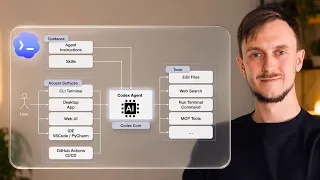
This course by Artem Istranin explores the OpenAI Codex platform as an agent for automated software development. Spanning seven lessons, it moves from core architectural concepts to hands-on implementation, demonstrating how to build fast, well-tested applications. You will see how to design a REST API with FastAPI, structure agentic planning for architecture alignment, enforce project standards through operational policies, and create reusable Docker skills. Advanced topics include integrating the Model Context Protocol for live documentation grounding and building automated code review bots into a GitHub Actions pipeline.
Who this course is for
This course is designed for Python developers and software engineers who want to integrate AI beyond simple chat interfaces. It is suitable for those comfortable with the command line and version control who are looking to automate repetitive coding, testing, and deployment tasks. Developers curious about agentic workflows, technical leads evaluating AI for team pipelines, and anyone interested in applying large language models to concrete software engineering problems will find the practical examples relevant and directly applicable.
How to study this sequence
Follow the lessons in sequential order, as each episode builds on the workflows established in the previous one. Start by understanding the agentic workflow theory, then apply it by building a FastAPI application with automated tests. After mastering planning and policy enforcement through AGENTS.md files, move on to creating reusable skills and containerizing applications. The final lessons on context protocols and CI/CD integration combine all earlier techniques. Replicate the code in your own environment using Python, VS Code, and GitHub to cement the concepts.
What you should be able to do
By completing this course, you will understand how to configure and supervise an OpenAI Codex agent for real software engineering tasks. You will be able to define system designs that an agent can follow, encode project rules into persistent instruction files, and generate production-ready Docker setups. You should also be able to integrate an AI agent into a CI/CD pipeline with GitHub Actions to perform tasks like automated testing, code review, and cloud deployment using the Model Context Protocol.