-
01
 BEST Embedded AI Hardware for Begineers! In-depth hands-on TUTORIAL
12min
BEST Embedded AI Hardware for Begineers! In-depth hands-on TUTORIAL
12min
-
02
TensorFlow Lite for Edge Devices – Tutorial
59min
-
03
Arduino Machine Learning Tutorial: Introduction to TinyML with Wio Terminal
26min
-
04
Intro to TinyML Part 2: Deploying a TensorFlow Lite Model to Arduino | Digi-Key Electronics
10min
-
05
Intro to TinyML Part 1: Training a Neural Network for Arduino in TensorFlow | Digi-Key Electronics
11min
-
06
TinyML Tutorial ESP32
13min
-
07
Computer Vision with TinyML (Edge AI + CNNs) | Deploy Machine Learning on Microcontrollers Devices
6h 29min
-
08
TinyML: Getting Started with STM32 X-CUBE-AI | Digi-Key Electronics
15min
-
09
TinyML: Getting Started with TensorFlow Lite for Microcontrollers | Digi-Key Electronics
18min
-
10
Adding AI to your ESP32 is Easier than You Think!
Current lesson




Summary
Machine Learning Comes to Microcontrollers
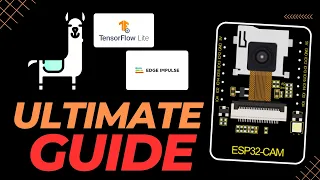
The ESP32 microcontroller has evolved into a powerful platform capable of running sophisticated machine learning models directly on the device. This video explores the practical applications of artificial intelligence on resource-constrained hardware, demonstrating that implementing ML on microcontrollers is more accessible than many engineers believe. Through hands-on examples using popular development boards like the M5StickC PLUS2, Seeed Studio XIAO ESP32 S3 Sense, and LILYGO T-Camera S3, the presenter showcases how developers can integrate AI capabilities without requiring extensive cloud infrastructure or specialized machine learning expertise.
Understanding Edge Impulse and TensorFlow Lite
The foundation of embedded machine learning on ESP32 relies on two critical tools: Edge Impulse and Google TensorFlow Lite for Microcontrollers. Edge Impulse provides a comprehensive platform for collecting sensor data, training models, and deploying them to edge devices with minimal friction. TensorFlow Lite for Microcontrollers is a lightweight framework optimized specifically for running neural networks on devices with limited memory and processing power. Together, these tools enable developers to create efficient ML pipelines that execute entirely on the ESP32, eliminating latency issues and privacy concerns associated with cloud-based inference. The workflow demonstrates how accessible machine learning has become, even for developers without deep expertise in neural networks or data science.
Object Detection with Real-Time Browser Streaming
One of the most impressive demonstrations involves object detection running directly on the ESP32 with live streaming to a web browser. Using a camera module connected to the microcontroller, the system can identify and classify objects in real-time while transmitting the video feed with overlaid detection results to any connected device. This capability opens possibilities for edge applications such as smart home monitoring, industrial inspection, and robotics without relying on cloud services. The combination of efficient model compression and hardware acceleration on modern ESP32 variants enables acceptable frame rates and inference speeds, making real-time object detection practical for many use cases.
Image Recognition and Classification Tasks
Beyond object detection, the ESP32 platform supports general image recognition tasks where the device must classify visual input into predefined categories. This could involve identifying different plant species, distinguishing between normal and abnormal items in manufacturing, or recognizing hand gestures for control interfaces. The process involves training a model on labeled image data using Edge Impulse, then deploying the compiled model to the ESP32 where it performs inference with remarkable efficiency. The accessibility of these tools means hobbyists, students, and professionals can experiment with computer vision applications that would have required expensive hardware or cloud services just a few years ago.
Keyword Spotting for Voice Control
Keyword spotting represents a particularly practical application of machine learning on embedded devices. By analyzing audio data, an ESP32 equipped with a microphone can detect specific wake words or commands without processing the entire audio stream in the cloud. This technique powers voice-activated devices and enables always-listening functionality while preserving battery life and privacy. The process involves training a small neural network on audio samples of target keywords, then running continuous inference on the device. When the system detects a matching keyword, it can trigger actions locally or wake up more power-hungry components for additional processing.
Time Series Data and Sensor Analytics
Beyond vision and audio, the ESP32 excels at analyzing time series data from various sensors such as accelerometers, gyroscopes, temperature sensors, and humidity monitors. Machine learning models can detect patterns in sensor readings to identify anomalies, predict equipment failures, or recognize complex behaviors. For example, accelerometer data combined with ML can distinguish between different types of motion or vibration patterns, enabling predictive maintenance in industrial settings or fall detection in wearable health applications. This versatility makes the ESP32 a platform for diverse IoT and embedded AI applications far beyond traditional computer vision tasks.
Little Language Models on Microcontrollers
Perhaps the most surprising capability demonstrated is running language models on the ESP32. While these "Little Language Models" are far smaller than state-of-the-art large language models, they can still perform useful tasks like simple question answering, text generation, or intent classification. This opens possibilities for local, privacy-preserving natural language interfaces on IoT devices. The technical challenge of fitting language models onto devices with kilobytes of RAM requires careful model quantization and optimization, but the results prove that even microcontrollers can participate in the AI revolution. This democratization of language model capabilities means embedded devices no longer need cloud connectivity for basic language understanding tasks.
Getting Started with Hardware and Tools
The video provides practical guidance on hardware selection and configuration, listing specific development boards with direct purchase links and detailing their AI-relevant specifications. The presenter includes comprehensive resources such as GitHub repositories with example code, Edge Impulse documentation, TensorFlow Lite tutorials, and Google Colab notebooks for model training. These resources enable developers to replicate the demonstrations and start building their own embedded AI applications immediately. The combination of affordable hardware, free development tools, and extensive documentation significantly lowers barriers to entry for anyone interested in implementing machine learning on microcontrollers.
What you will learn
- Implement object detection and image recognition on ESP32 microcontrollers
- Deploy machine learning models using Edge Impulse and TensorFlow Lite for Microcontrollers
- Build keyword spotting systems for voice-activated embedded applications
- Analyze time series sensor data with neural networks for anomaly detection
- Run language models on resource-constrained devices for local inference
Concepts covered
Technologies used
Chapters 8 markers
- Introduction to AI on ESP32
- Edge Impulse and TensorFlow Lite overview
- Real-time object detection with web streaming
- Image recognition and classification examples
- Keyword spotting for voice control
- Time series analysis and sensor anomaly detection
- Running language models on microcontrollers
- Hardware selection and getting started resources
Next suggested video
Reviews
No reviews yet. Be the first to rate this lesson.