-
01
 BEST Embedded AI Hardware for Begineers! In-depth hands-on TUTORIAL
Current lesson
BEST Embedded AI Hardware for Begineers! In-depth hands-on TUTORIAL
Current lesson
-
02
TensorFlow Lite for Edge Devices – Tutorial
59min
-
03
Arduino Machine Learning Tutorial: Introduction to TinyML with Wio Terminal
26min
-
04
Intro to TinyML Part 2: Deploying a TensorFlow Lite Model to Arduino | Digi-Key Electronics
10min
-
05
Intro to TinyML Part 1: Training a Neural Network for Arduino in TensorFlow | Digi-Key Electronics
11min
-
06
TinyML Tutorial ESP32
13min
-
07
Computer Vision with TinyML (Edge AI + CNNs) | Deploy Machine Learning on Microcontrollers Devices
6h 29min
-
08
TinyML: Getting Started with STM32 X-CUBE-AI | Digi-Key Electronics
15min
-
09
TinyML: Getting Started with TensorFlow Lite for Microcontrollers | Digi-Key Electronics
18min
-
10
Adding AI to your ESP32 is Easier than You Think!
10min





Summary
Introduction to Embedded AI Hardware
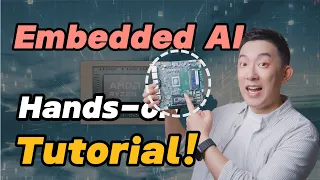
Embedded artificial intelligence has become increasingly accessible to developers of all skill levels, particularly through dedicated development boards designed for x86 platforms. This hands-on tutorial explores one of the most beginner-friendly options available for practicing edge AI and embedded application development. The board in question offers an excellent entry point for developers transitioning from traditional software development into the hardware realm, combining ease of use with powerful capabilities that support real-world AI inference and edge computing scenarios.
Why x86 Platforms Matter for AI Development
The x86 architecture remains one of the most prevalent and well-documented processor families in computing. For beginners, this means extensive community support, comprehensive documentation, and compatibility with familiar development tools and frameworks. Unlike ARM or specialized AI accelerators, x86 boards allow developers to leverage existing knowledge while gradually introducing concepts of edge computing and hardware constraints. This platform choice significantly reduces the learning curve and makes it practical for students, hobbyists, and professionals to experiment with AI models in resource-constrained environments without completely abandoning their comfort zone.
Board Features and Specifications
The featured development board is specifically designed to bridge the gap between traditional desktop development and embedded systems. It provides sufficient computational power to run inference on modern AI models while maintaining the physical and thermal constraints expected of edge devices. The board's architecture supports popular AI frameworks and runtime environments, enabling developers to deploy models trained on standard platforms directly onto the hardware. Key specifications include integrated connectivity options, expandable storage, and GPIO interfaces that allow for sensor integration and real-world application prototyping without requiring extensive external components.
Getting Started with Edge AI Development
Beginners approaching embedded AI development often struggle with the transition from software-only projects to hardware integration. This board simplifies that process by providing a complete development environment right out of the box. The setup process is straightforward, typically involving standard operating system installation followed by SDK and framework installation. The tutorial walks through these initial steps, ensuring newcomers can have a functional development environment within minutes rather than hours. Having a properly configured board is essential before attempting any actual AI model deployment or edge application development.
Practical AI Model Deployment
One of the most valuable aspects of learning on this platform is understanding how to take pre-trained AI models and optimize them for edge deployment. Models trained on high-end GPUs or cloud infrastructure must be quantized, pruned, or otherwise optimized before running efficiently on embedded hardware. The development board supports popular optimization frameworks and includes tools for measuring inference latency and energy consumption. Through hands-on experimentation, developers learn the trade-offs between model accuracy and computational requirements, gaining intuition about real-world constraints that don't exist in traditional machine learning courses.
Building End-to-End Applications
Embedded AI isn't just about running inference; it's about building complete applications that sense their environment, process data locally, and respond intelligently. This board's connectivity options and GPIO interfaces enable developers to attach cameras, sensors, and other peripherals, creating practical projects like object detection systems, environmental monitoring stations, or anomaly detection applications. The hands-on nature of the tutorial emphasizes this end-to-end thinking, helping beginners understand how to move from isolated model inference to integrated systems that solve actual problems. This perspective shift is crucial for anyone hoping to work with edge AI in professional or research contexts.
Development Tools and Frameworks
The ecosystem supporting x86 embedded development is mature and diverse. Common frameworks like TensorFlow Lite, ONNX Runtime, and OpenVINO all support deployment on this platform, giving developers flexibility in their toolchain choices. The tutorial covers practical aspects of working with these tools, including model format conversion, runtime configuration, and performance profiling. Understanding which tools and frameworks to use for specific applications is an important skill that extends beyond just this single board. Developers equipped with this knowledge can adapt to different hardware platforms more easily as their skills advance.
Community Support and Continued Learning
Choosing a popular development board means access to an active community willing to help troubleshoot problems and share solutions. The instructor explicitly invites questions about the board, development processes, and related topics, reflecting the collaborative nature of embedded AI learning. This community aspect is often underestimated but proves invaluable when facing obscure issues or seeking advice on optimization strategies. For beginners, knowing there's reliable support available significantly reduces the frustration factor when encountering challenges, making the learning journey more sustainable and enjoyable.
Real-World Applications and Next Steps
Embedded AI skills developed on this platform directly apply to numerous industry domains: industrial IoT, smart cities, healthcare monitoring, autonomous systems, and more. The board serves as a foundation for understanding principles that transfer to specialized hardware like TPUs or dedicated AI accelerators, even though those devices follow different programming paradigms. Mastering the fundamentals on accessible x86 hardware prepares developers to tackle increasingly complex embedded AI challenges with confidence, whether in academic research, startup prototyping, or enterprise deployment scenarios.
What you will learn
- Understand embedded AI hardware architecture and x86 platform advantages for edge development
- Set up and configure development boards for AI model deployment
- Optimize and quantize AI models for edge computing constraints
- Deploy end-to-end applications combining inference with sensor integration
- Measure and profile inference performance on resource-limited hardware
Concepts covered
Technologies used
Chapters 8 markers
Next suggested video
Reviews
No reviews yet. Be the first to rate this lesson.