-
01
 BEST Embedded AI Hardware for Begineers! In-depth hands-on TUTORIAL
12min
BEST Embedded AI Hardware for Begineers! In-depth hands-on TUTORIAL
12min
-
02
TensorFlow Lite for Edge Devices – Tutorial
59min
-
03
Arduino Machine Learning Tutorial: Introduction to TinyML with Wio Terminal
26min
-
04
Intro to TinyML Part 2: Deploying a TensorFlow Lite Model to Arduino | Digi-Key Electronics
10min
-
05
Intro to TinyML Part 1: Training a Neural Network for Arduino in TensorFlow | Digi-Key Electronics
11min
-
06
TinyML Tutorial ESP32
Current lesson
-
07
Computer Vision with TinyML (Edge AI + CNNs) | Deploy Machine Learning on Microcontrollers Devices
6h 29min
-
08
TinyML: Getting Started with STM32 X-CUBE-AI | Digi-Key Electronics
15min
-
09
TinyML: Getting Started with TensorFlow Lite for Microcontrollers | Digi-Key Electronics
18min
-
10
Adding AI to your ESP32 is Easier than You Think!
10min




Summary
Understanding TinyML and Edge Devices
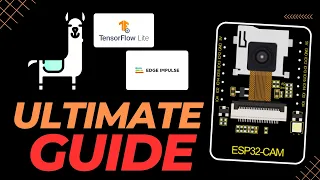
TinyML represents a paradigm shift in machine learning deployment, enabling artificial intelligence models to run directly on resource-constrained microcontrollers and embedded systems rather than relying on cloud infrastructure. This approach offers significant advantages including reduced latency, improved privacy, lower bandwidth consumption, and offline operation capabilities. The ESP32-S3 development board serves as an ideal platform for exploring TinyML concepts, combining sufficient computational power with low energy consumption. By bringing ML inference to the edge device itself, developers can build intelligent IoT applications that respond instantly to sensor data without network dependency.
Edge Impulse Platform Fundamentals
Edge Impulse Studio provides an accessible, web-based environment designed specifically for creating machine learning models for embedded devices. The platform abstracts much of the complexity involved in traditional ML workflows, making it approachable for developers new to machine learning. Rather than requiring deep expertise in TensorFlow or neural network architecture, Edge Impulse guides users through a structured process: data collection, feature engineering, model training, and optimization. The platform handles model compression and conversion to formats compatible with microcontroller deployment, including TensorFlow Lite, which is essential for running inference on resource-limited devices like the ESP32-S3.
Building a Complete TinyML Project
This tutorial walks through constructing a practical temperature and humidity classification system using the DHT22 sensor connected to an ESP32-S3 board. The DHT22 sensor provides reliable environmental data collection, serving as the input source for the machine learning model. The complete project flow involves connecting the sensor to the microcontroller via jumper wires, configuring the Arduino IDE with appropriate libraries, and establishing communication protocols that allow real-time data acquisition. The hardware setup is straightforward enough for beginners yet demonstrates professional IoT practices, making it an excellent learning vehicle for understanding how ML models integrate with physical sensors in production-like scenarios.
Data Collection and Model Training Strategy
Successful machine learning models depend critically on quality training data. In this project workflow, developers collect temperature and humidity readings from the DHT22 sensor, labeling them appropriately for the classification task. Edge Impulse's data collection tools streamline this process, allowing direct sensor integration and organized dataset management. Once sufficient data is gathered, the platform's training algorithms process this information to learn patterns and relationships. The model training phase in Edge Impulse is highly automated; the platform selects appropriate algorithms, applies feature extraction, and optimizes model parameters. Importantly, the platform focuses on creating compact models that fit within the ESP32-S3's memory constraints while maintaining reasonable accuracy for real-world applications.
Deployment to Microcontroller Hardware
Deploying a trained model to the ESP32-S3 involves converting the model into a format the microcontroller can execute efficiently. Edge Impulse handles this compilation process, generating an Arduino library that encapsulates the entire model. Developers download this library, import it into the Arduino IDE alongside other required libraries like the DHT sensor library, and write firmware code that orchestrates the inference pipeline. The deployment process is largely automated and well-documented, reducing integration friction. Once deployed, the firmware runs continuously on the board, collecting sensor data, feeding it to the ML model, and generating predictions in real-time. This seamless integration between training and deployment is a key advantage of the Edge Impulse ecosystem.
Real-Time Inference and Arduino Programming
The firmware component ties everything together, implementing the inference loop that continuously reads sensor values and runs them through the deployed ML model. Arduino programming for TinyML involves understanding key concepts like data preprocessing, model invocation through the Edge Impulse library, and result interpretation. The inference process is remarkably efficient; the compiled model executes within milliseconds even on the constrained ESP32-S3. Developers must handle practical considerations including sensor calibration, error handling, and response generation based on model predictions. The tutorial demonstrates how to structure this code cleanly, managing the timing of sensor reads and inference operations to create a responsive, reliable system. Understanding this inference loop is crucial because it represents the runtime behavior of any TinyML application.
Prerequisites and Software Environment
Successfully completing this TinyML project requires assembling both hardware components and software tools. Hardware-wise, the ESP32-S3 development board serves as the computational platform, the DHT22 sensor provides environmental measurements, jumper wires facilitate connections, and a USB cable enables programming and power delivery. On the software side, the Arduino IDE provides the programming environment where firmware is written and uploaded to the board. Edge Impulse Studio operates as a web platform requiring no installation, accessible through any modern browser. Additional libraries must be integrated into the Arduino environment: the DHT library for sensor communication and the Edge Impulse Arduino library for model inference. The tutorial documentation includes links to all necessary resources, and the accompanying GitHub repository provides complete, production-ready code that learners can reference or adapt.
Learning Outcomes and Next Skill Development
Completing this tutorial provides foundational understanding of TinyML concepts and practical deployment skills applicable to numerous real-world projects. Learners develop competency in using Edge Impulse's visual model development process, understanding microcontroller resource constraints, and integrating sensor hardware with machine learning inference. The specific temperature-humidity classification task is relatively simple intentionally; it demonstrates core concepts without overwhelming complexity. Upon finishing, developers possess the knowledge and experience needed to extend this foundation toward more sophisticated TinyML applications, whether involving different sensor types, alternative classification or regression tasks, or deployment across multiple devices. The skills translate directly to professional IoT and edge AI development, positioning learners for roles involving embedded machine learning systems.
What you will learn
- Understand TinyML fundamentals and edge computing benefits
- Use Edge Impulse Studio for model creation and optimization
- Integrate DHT22 sensors with ESP32-S3 microcontrollers
- Collect, label, and prepare training data for embedded ML
- Deploy trained models to embedded devices using Arduino IDE
- Implement real-time inference loops on microcontrollers
Concepts covered
Technologies used
Chapters 8 markers
- Introduction to TinyML and ESP32-S3
- Hardware setup and component overview
- Edge Impulse Studio registration and project creation
- Data collection with DHT22 sensor
- Model training and optimization process
- Generating and downloading the model library
- Deploying to ESP32-S3 via Arduino IDE
- Testing real-time inference results
Next suggested video
Reviews
No reviews yet. Be the first to rate this lesson.