-
01
 BEST Embedded AI Hardware for Begineers! In-depth hands-on TUTORIAL
12min
BEST Embedded AI Hardware for Begineers! In-depth hands-on TUTORIAL
12min
-
02
TensorFlow Lite for Edge Devices – Tutorial
59min
-
03
Arduino Machine Learning Tutorial: Introduction to TinyML with Wio Terminal
26min
-
04
Intro to TinyML Part 2: Deploying a TensorFlow Lite Model to Arduino | Digi-Key Electronics
10min
-
05
Intro to TinyML Part 1: Training a Neural Network for Arduino in TensorFlow | Digi-Key Electronics
11min
-
06
TinyML Tutorial ESP32
13min
-
07
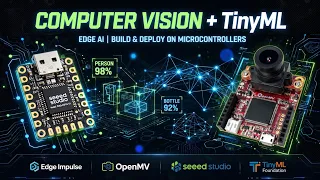
Computer Vision with TinyML (Edge AI + CNNs) | Deploy Machine Learning on Microcontrollers Devices
Current lesson
-
08
TinyML: Getting Started with STM32 X-CUBE-AI | Digi-Key Electronics
15min
-
09
TinyML: Getting Started with TensorFlow Lite for Microcontrollers | Digi-Key Electronics
18min
-
10
Adding AI to your ESP32 is Easier than You Think!
10min




Summary
Understanding Computer Vision Fundamentals
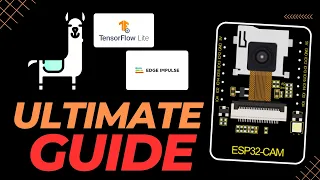
Computer vision is the field of artificial intelligence that enables machines to interpret and understand visual information from images and video streams. This foundational concept underpins the entire course, as students learn how digital images are processed, analyzed, and transformed into actionable insights. The course breaks down the mathematical and conceptual principles that allow computers to extract meaningful features from raw pixel data, preparing learners for more advanced applications in embedded environments where computational resources are severely limited.
Introduction to Convolutional Neural Networks
Convolutional Neural Networks (CNNs) represent the gold standard architecture for computer vision tasks. The course provides a deep dive into how CNNs work, exploring convolutional layers, pooling operations, and fully connected layers that together enable machines to recognize patterns in images. Understanding CNN architecture is essential before deploying models to microcontrollers, as it informs decisions about model compression, quantization, and optimization strategies. Students gain hands-on experience with both image classification and object detection tasks, two critical applications of CNNs in real-world edge computing scenarios.
The TinyML Movement and Edge Computing
TinyML represents a paradigm shift in how machine learning is deployed. Rather than sending data to cloud servers for processing, TinyML pushes intelligence directly to edge devices—microcontrollers, single-board computers, and IoT sensors. This approach eliminates latency, reduces bandwidth consumption, enhances privacy, and enables offline operation. The course contextualizes TinyML within the broader landscape of edge AI, showing learners why deploying models locally has become increasingly important for applications ranging from industrial automation to smart wearables and autonomous systems. The collaboration with the TinyML Foundation ensures that students learn from the latest best practices and industry standards.
Model Training and Inference on Embedded Devices
Moving from cloud-based machine learning to embedded deployment requires a completely different mindset. The course guides students through the entire lifecycle: training models on powerful computers, converting them to optimized formats, and running inference on resource-constrained microcontrollers. Quantization, pruning, and knowledge distillation are key techniques covered to shrink model size without sacrificing accuracy. Students learn to balance performance and resource consumption, making critical trade-offs between model complexity and hardware capabilities. Practical experience with actual microcontroller boards reinforces theoretical concepts and builds confidence in deploying real applications.
Hands-On Projects with Edge AI Tools
The course emphasizes learning through practical projects using industry-standard tools from Edge Impulse, OpenMV, and Seeed Studio. These platforms abstract away much of the complexity of embedded machine learning, providing visual interfaces and optimized libraries that accelerate development. Students build complete applications that go from raw sensor data to actionable predictions, experiencing firsthand how computer vision models operate in real hardware environments. This hands-on approach ensures that theoretical knowledge translates into practical skills that employers value, particularly in IoT, robotics, and autonomous systems industries.
Real-World Applications and Use Cases
Computer vision on embedded devices powers countless modern applications. Quality control systems in manufacturing can inspect products at production speed without reliance on cloud connectivity. Wearable devices can perform health monitoring and gesture recognition locally, preserving user privacy. Autonomous robots can navigate and make decisions without constant communication with external servers. Agricultural systems can identify plant diseases and optimize irrigation in real time. The course explores these diverse applications, showing learners how the concepts and tools they master apply across industries and contexts. This breadth of application scenarios demonstrates the versatility and growing importance of TinyML in modern technology.
Required Prerequisites and Learning Path
The course targets a specific audience: individuals with Python programming basics, foundational understanding of neural networks and machine learning concepts, and genuine curiosity about how embedded systems work. Students should be comfortable with concepts like training, evaluation, and basic model optimization before diving into edge-specific challenges. AI enthusiasts, IoT developers, computer science students, and researchers in robotics and autonomous systems all find value in this curriculum. The prerequisite knowledge ensures that students can focus on edge-specific topics without getting bogged down in fundamental ML concepts, allowing for a more efficient and practical learning experience.
The Future of AI at the Edge
The course positions TinyML within the broader trajectory of artificial intelligence. As edge devices become more powerful, as model compression techniques improve, and as frameworks mature, the feasibility of running sophisticated AI models locally continues to expand. This democratization of machine learning—moving it from data centers to devices—represents one of the most significant trends in modern AI development. Students completing this course gain early expertise in a field that will only grow more important as businesses seek faster, more private, and more efficient ways to deploy artificial intelligence. The course essentially prepares learners to be part of this next generation of AI development.
Industry Partnerships and Framework Integration
The collaboration between TheTechSlayer and leading organizations—Edge Impulse, OpenMV, Seeed Studio, and the TinyML Foundation—ensures that the course content reflects current industry practices and emerging standards. Students gain exposure to tools and frameworks that are actively used in production environments, giving them competitive advantage in the job market. The emphasis on established platforms rather than one-off solutions means that skills learned in this course remain relevant as technologies evolve. This professional-grade approach distinguishes the course from purely academic treatments of machine learning.
What you will learn
- Build computer vision applications that interpret images and video streams
- Design and optimize Convolutional Neural Networks for embedded deployment
- Train machine learning models and convert them for microcontroller execution
- Use Edge Impulse, OpenMV, and related tools for rapid TinyML development
- Implement real-world computer vision projects on low-power hardware
- Understand quantization, pruning, and model optimization techniques
Concepts covered
Technologies used
Chapters 12 markers
- Course Introduction & Learning Objectives
- Computer Vision Fundamentals
- Convolutional Neural Networks Architecture
- Image Classification with CNNs
- Object Detection Techniques
- TinyML Concepts & Edge Computing
- Model Quantization and Optimization
- Edge Impulse Platform Walkthrough
- Deploying Models to Microcontrollers
- Hands-On Project: Complete Computer Vision Application
- Real-World Applications & Use Cases
- Future of AI at the Edge & Next Steps
Next suggested video
Reviews
No reviews yet. Be the first to rate this lesson.