-
01
 The ultimate guide to AEO: How to get ChatGPT to recommend your product | Ethan Smith (Graphite)
1h 11min
The ultimate guide to AEO: How to get ChatGPT to recommend your product | Ethan Smith (Graphite)
1h 11min
-
02
How Claude Code Ranked Me FIRST on Google (It’s OVER for SEO Agencies)
32min
-
03
The Complete Guide to AI Search Optimization (SEO, AEO & GEO Explained)
13min
-
04
Complete SEO Course (3 Hours): Rank #1 AI Search | Prompts Included
3h 19min
-
05
The Complete SEO & AI SEO Course for 2026 (Full Beginner’s Guide)
50min
-
06
Full Course: How to Get Traffic From AI And ChatGPT | LLM SEO, GEO, and AEO
1h 30min
-
07
A Complete Guide to AI SEO in 2026 (AEO, GEO, LLMO)
9min
-
08
How To Do an AI Search Optimisation Audit (Step-by-Step Guide)
Current lesson
-
09
How To Train Google’s AI to Send You Customers
12min
-
10
A Complete Guide to AI Search Optimisation for 2026 (AI SEO, AEO, GEO)
21min









Summary
Understanding AI Search Optimisation in 2026
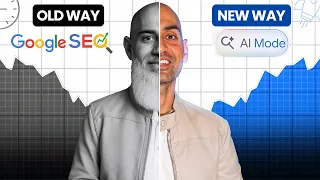
The digital landscape is undergoing a fundamental transformation. Customers increasingly begin their buying journeys in AI platforms rather than traditional search engines like Google. Gemini 3's recent release exemplifies this shift, though access limitations reveal the explosive demand for AI-powered search tools. For marketing leaders and SEO professionals, this presents both an opportunity and a challenge: understanding how to measure and optimize brand visibility in these emerging platforms has become essential. Traditional SEO audits no longer capture the complete picture of where customers discover your brand.
Why AI Search Audits Differ From Traditional SEO
Conventional SEO audits focus on technical optimization, on-page factors, backlinks, and visibility metrics designed for Google's algorithm. However, AI search platforms operate on fundamentally different principles. They rely on Retrieval-Augmented Generation (RAG) systems, which combine language models with external data sources to generate contextual, conversational responses. This architectural difference means that strategies perfected for Google rankings may not translate effectively to AI platforms. The audit methodology must shift accordingly, requiring a fresh approach that acknowledges how LLMs discover, prioritize, and present brand information to users.
The Critical Shift From Visibility to Sentiment
Traditional SEO emphasizes visibility—whether your website appears in search results and at what position. AI search introduces a more nuanced metric: sentiment and citation quality. It is no longer sufficient to simply appear in AI-generated answers; what matters equally is how your brand is mentioned, whether it receives proper attribution, and what context surrounds those mentions. Sentiment analysis becomes crucial because an AI platform might reference your brand but frame it negatively or dismissively. Additionally, being cited as an authoritative source carries more weight than a passive mention. This sentiment-first approach requires brands to understand not just visibility gaps but also how their reputation is being portrayed across multiple AI systems.
Brand Strength and RAG Components in Modern SEO
While technical optimization, on-site factors, and backlinks remain relevant—especially for the data retrieval components that feed RAG systems—brand strength has ascended to a new level of importance. Search engines have always valued brand authority, but AI platforms amplify this weighting significantly. A strong, recognizable brand with substantial online presence, positive reviews, and consistent messaging across platforms becomes a primary signal that RAG systems use to select and present content. This means that traditional SEO investments still pay dividends, but they must be complemented by active brand-building efforts: reputation management, thought leadership content, and strategic mentions in authoritative contexts.
Systematically Testing Across Multiple AI Platforms
A comprehensive AI search audit requires testing visibility across several distinct platforms: ChatGPT, Perplexity, Google's AI Overviews, and emerging players like Gemini. Each platform has different retrieval mechanisms, citation preferences, and user interfaces, meaning a brand might perform well on one platform while remaining invisible on another. Manual testing across these systems is extraordinarily time-consuming and prone to inconsistency. For each relevant query category, marketers must simulate real user interactions, observe whether their brand appears, assess the quality of citations, and evaluate sentiment. This process, conducted thoroughly by agencies, can require 25+ hours of labor per client audit. Most marketers lack both the time and tools to execute this systematically without external support or specialized software.
The GEO Audit Framework and Competitive Advantage
Generative Engine Optimization (GEO) audits provide a structured methodology for evaluating and improving AI search performance. This framework systematizes the process of identifying visibility gaps, understanding competitive positioning, and discovering optimization opportunities that competitors may still overlook. By following a clear GEO audit process, brands can prioritize which queries matter most, understand why they are not appearing in AI results, and develop targeted strategies to improve performance. The framework also reveals which content types, formats, and messaging styles resonate best with RAG systems, providing actionable insights that generic SEO advice cannot supply.
Implementing Your Own AI Search Audit
While agencies like Exposure Ninja conduct comprehensive 25-hour audits, businesses can implement a simplified version internally. Starting with a list of critical target queries, marketers can manually test them across major AI platforms, documenting visibility, citation quality, and sentiment. This manual approach provides education and baseline understanding but remains laborious and prone to human error. Alternatively, specialized AI Visibility Toolkits—such as Semrush's offering—automate much of this testing, reduce time investment significantly, and provide structured reporting that highlights gaps and opportunities. These tools enable a smarter allocation of audit time by automatically surfacing the most impactful optimization areas.
Building Sustainable AI Search Visibility
The ultimate goal of an AI search audit is to create a clear, actionable roadmap for improving visibility and sentiment across platforms before market saturation increases competition. Early adopters of systematic AI search optimization gain a significant advantage, establishing brand authority in these new environments while competitors remain focused exclusively on Google. By understanding how AI platforms discover and present information, brands can shape their content strategy, link-building efforts, and brand positioning to naturally align with how LLMs retrieve and cite sources. This proactive approach transforms AI search from an unpredictable variable into a manageable channel within an integrated marketing strategy.
What you will learn
- Understand why AI search audits require fundamentally different strategies than traditional SEO
- Identify and measure brand sentiment and citation quality across AI platforms
- Implement a GEO audit framework to test visibility systematically
- Optimize content and brand signals for RAG-based retrieval systems
- Use specialized toolkits to automate AI search visibility testing
- Develop a competitive advantage through early AI search optimization
Concepts covered
Technologies used
Chapters 8 markers
- Introduction and the Gemini 3 shift
- Why AI search audits differ from traditional SEO
- The visibility-to-sentiment transition
- RAG systems and brand strength importance
- Testing across ChatGPT, Perplexity, and Google AI
- GEO audit framework and methodology
- Manual vs automated audit approaches
- Building sustainable AI visibility strategy
Next suggested video
Reviews
No reviews yet. Be the first to rate this lesson.