-
01
 Learn RAG From Scratch – Python AI Tutorial from a LangChain Engineer
2h 33min
Learn RAG From Scratch – Python AI Tutorial from a LangChain Engineer
2h 33min
-
02
OpenAI Embeddings and Vector Databases Crash Course
18min
-
03
What is a Vector Database? Powering Semantic Search & AI Applications
9min
-
04
RAG Explained For Beginners
10min
-
05
RAG Explained in 12 Minutes
Current lesson
-
06
Vector Search RAG Tutorial – Combine Your Data with LLMs with Advanced Search
1h 11min
-
07
Complete RAG Crash Course With Langchain In 2 Hours
2h 08min
-
08
What is RAG ? | Completely Explained in 15 Minutes
17min
-
09
Local Retrieval Augmented Generation (RAG) from Scratch (step by step tutorial)
5h 40min
-
10
RAG Fundamentals and Advanced Techniques – Full Course
1h 36min




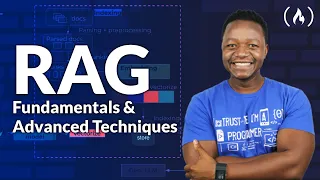
Summary
Understanding RAG Fundamentals
Retrieval-Augmented Generation (RAG) has become one of the most critical concepts in modern artificial intelligence, yet many practitioners still lack a clear understanding of what it truly is and why it matters. This comprehensive video breaks down RAG from first principles, using accessible analogies to explain how the technology works without requiring deep mathematical background. The core idea behind RAG is elegantly simple: instead of relying solely on a language model's internal knowledge, RAG systems augment the model with real-time access to external information sources. This approach mirrors how a student might approach an open-book exam—rather than memorizing everything, they can reference accurate, up-to-date sources to provide better answers.
The Open-Book Exam Analogy
The open-book exam analogy serves as a powerful mental model for understanding RAG's value proposition. Just as a student with access to reference materials can provide more accurate and nuanced answers than one relying purely on memory, a language model enhanced with RAG can generate responses grounded in specific, retrieved documents. This paradigm shift is fundamental to building reliable AI systems, especially in enterprise environments where accuracy and traceability are non-negotiable. The analogy extends further: the quality of the exam performance depends not just on the student's intelligence but also on their ability to quickly find and synthesize relevant information from available sources.
Debunking Common RAG Myths
One of the most persistent myths surrounding RAG is that the technology is somehow "dead" or obsolete—a claim that fundamentally misunderstands the role RAG plays in production AI systems. This misconception often stems from developments in larger context windows, leading some to believe that simply giving a model more tokens eliminates the need for retrieval-augmented approaches. However, the reality is far more nuanced. While larger context windows do provide benefits, they cannot replace RAG's ability to efficiently retrieve relevant information, maintain cost-effectiveness at scale, and ensure that systems remain grounded in current, factual data. Another widespread misconception is that RAG systems are inherently slow or cumbersome—in practice, well-architected RAG implementations deliver both speed and accuracy when properly optimized. Understanding these myths is crucial for practitioners who need to make informed decisions about which approaches to adopt in their own systems.
Core Architecture and Document Chunking
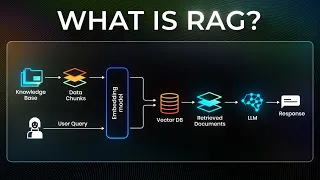
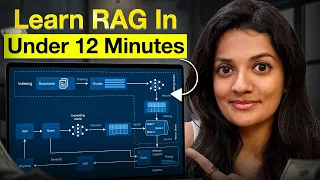
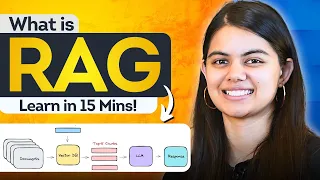
Successful RAG systems depend heavily on thoughtful architecture decisions, beginning with how documents are chunked and stored. Document chunking—the process of breaking large documents into manageable pieces—directly impacts retrieval quality and model performance. Different chunking strategies yield vastly different results: overly large chunks may dilute relevant information with noise, while chunks that are too small might fragment meaning across multiple pieces. The architecture of a RAG system typically flows from raw documents through embedding and vectorization, into a vector database for efficient retrieval, and finally into a language model that synthesizes the retrieved context with user queries. This pipeline must be carefully designed to balance retrieval precision, latency, and cost considerations across the entire system.
Embedding Models and Vector Database Selection
Choosing appropriate embedding models and vector databases represents one of the most consequential decisions in RAG implementation. Embedding models transform text into dense numerical vectors that capture semantic meaning, enabling similarity-based retrieval. The landscape of available options has expanded significantly, with leading choices including OpenAI's text-embedding-3-large for production systems requiring maximum quality, Voyage AI's latest Voyage 3 model for cutting-edge performance, and open-source alternatives like BGE-large and E5-Mistral from Hugging Face for teams prioritizing flexibility and cost control. Vector databases serve as the infrastructure layer for storing and querying these embeddings at scale. Popular options include Pinecone for managed, serverless retrieval, Weaviate as an open-source alternative with rich filtering capabilities, Qdrant for high-performance search requirements, Milvus for massive-scale deployments, and Chroma DB as a lightweight, AI-native option for developers building applications quickly.
The 10 Essential RAG Patterns
Mastery of RAG in 2026 requires understanding multiple architectural patterns beyond basic retrieval-augmented generation. These patterns include simple RAG (straightforward query-document retrieval), branched RAG (multiple retrieval paths explored in parallel), HyDE (Hypothetical Document Embeddings, which generates hypothetical answers to improve retrieval), and agentic approaches that allow RAG systems to reason about when and how to retrieve information. Graph RAG represents an advanced pattern leveraging knowledge graphs to capture relationships between entities and concepts, enabling richer contextual understanding. Additional patterns include recursive retrieval for handling complex hierarchical information, multi-modal RAG for processing images alongside text, and SQL-based patterns for structured data. Each pattern addresses specific challenges encountered in real-world deployments, and practitioners must understand when and how to apply them based on their data characteristics and application requirements.
Orchestration Frameworks and Implementation
Building production RAG systems requires orchestration frameworks that handle the complexity of multi-step pipelines. LangChain has emerged as the dominant framework for constructing context-aware reasoning applications, providing abstractions for chaining retrieval, processing, and generation steps. LlamaIndex specializes in advanced data ingestion, sophisticated chunking strategies, and multi-modal RAG capabilities, making it particularly valuable for teams dealing with diverse data sources. These frameworks abstract away much of the infrastructure complexity, allowing developers to focus on application-level logic and optimization. The combination of well-chosen embedding models, appropriate vector databases, and robust orchestration frameworks creates a foundation for building intelligent systems that can reliably ground their outputs in retrieved evidence.
Enterprise AI Systems in Production
The ultimate test of RAG understanding comes through deploying systems in enterprise environments where reliability, scalability, and cost-efficiency are paramount. Real enterprise AI systems increasingly leverage RAG as their core architecture, enabling them to stay current with information, maintain auditability, and scale efficiently as organizations grow. Success in these environments requires not just technical knowledge but also understanding the operational aspects: how to monitor retrieval quality, optimize chunk sizes based on real usage patterns, manage the costs of embedding and retrieval at scale, and adapt systems as information sources change. The evolution toward agentic AI systems—where AI agents autonomously decide when to retrieve information and how to act on it—represents the next frontier, building directly on the RAG foundations covered in this video.
What you will learn
- Understand the foundational concepts of RAG and how it differs from standard language model approaches
- Debunk common myths about RAG obsolescence and the limitations of large context windows
- Design effective document chunking strategies and RAG system architecture
- Select appropriate embedding models and vector databases for specific use cases
- Implement the 10 essential RAG patterns including simple, branched, HyDE, agentic, and graph RAG approaches
- Build production RAG systems using orchestration frameworks like LangChain and LlamaIndex
Concepts covered
Technologies used
Chapters 6 markers
Next suggested video
Reviews
No reviews yet. Be the first to rate this lesson.