-
01
 The ultimate guide to AEO: How to get ChatGPT to recommend your product | Ethan Smith (Graphite)
1h 11min
The ultimate guide to AEO: How to get ChatGPT to recommend your product | Ethan Smith (Graphite)
1h 11min
-
02
How Claude Code Ranked Me FIRST on Google (It’s OVER for SEO Agencies)
32min
-
03
The Complete Guide to AI Search Optimization (SEO, AEO & GEO Explained)
13min
-
04
Complete SEO Course (3 Hours): Rank #1 AI Search | Prompts Included
Current lesson
-
05
The Complete SEO & AI SEO Course for 2026 (Full Beginner’s Guide)
50min
-
06
Full Course: How to Get Traffic From AI And ChatGPT | LLM SEO, GEO, and AEO
1h 30min
-
07
A Complete Guide to AI SEO in 2026 (AEO, GEO, LLMO)
9min
-
08
How To Do an AI Search Optimisation Audit (Step-by-Step Guide)
21min
-
09
How To Train Google’s AI to Send You Customers
12min
-
10
A Complete Guide to AI Search Optimisation for 2026 (AI SEO, AEO, GEO)
21min





Summary
SEO Transformation for the AI Era
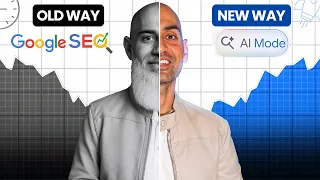
Search engine optimization has undergone a fundamental shift with the integration of artificial intelligence into search platforms. This comprehensive 3-hour course addresses how SEO strategies must evolve to remain effective in 2025 and beyond. The traditional approaches that dominated previous years no longer deliver the same results, requiring practitioners to adopt new frameworks and tools. By understanding these changes and implementing modern techniques, individuals can take control of their own SEO efforts without relying on expensive agencies or consultants.
Understanding 2025 SEO Fundamentals
The course begins by establishing why SEO has changed so dramatically. Search engines now incorporate AI-powered features like Google AI Overviews, which display generated summaries directly in results, fundamentally altering how content gets discovered and displayed. Traditional keyword targeting and link-building alone no longer guarantee visibility. The mindset shift required involves recognizing that search is becoming more intelligent, more personalized, and more focused on demonstrating expertise and authority. Understanding these shifts forms the foundation for all subsequent strategies and tactics discussed throughout the course.
Strategic Research and Competitive Intelligence
Effective SEO begins with comprehensive research. The course covers modern keyword research methodologies using accessible tools that don't require expensive subscriptions or complex technical knowledge. Beyond keywords, competitor analysis reveals hidden opportunities that most practitioners overlook. The approach teaches how to organize research findings systematically, avoiding the common trap of analysis paralysis where endless research prevents actual implementation. Practical prompts are included to streamline the research process, enabling practitioners to extract actionable insights quickly and move toward execution with confidence.
Building Site Architecture for Long-Term Success
Website structure serves dual purposes: optimizing the experience for human visitors while simultaneously signaling relevance and authority to search engines. The course explains how to plan information architecture that supports both immediate user needs and long-term growth objectives. Common structural mistakes that inadvertently damage rankings are identified and corrected. Proper organization ensures that content relationships are clear, internal linking becomes natural, and search engines can efficiently crawl and understand the site's topical focus. This foundational work prevents future complications and provides a scalable framework as content libraries expand.
Content Creation Aligned with AI Search Systems
Creating high-quality content in 2025 means writing material that gets cited and featured in AI search engines like Google AI Overviews, Perplexity, and GPT Search. The course addresses how to balance individual article quality with scalable content production workflows. AI tools are leveraged to maintain consistent output without sacrificing the expertise and authority that modern search algorithms reward. The content workflow section provides practical templates and processes that teams can implement immediately, demonstrating how to write at scale while preserving the depth and originality that makes content valuable to both users and search systems.
Local Search Optimization and Citations
Local SEO remains critical for businesses serving specific geographic areas. Optimizing Google Business Profiles goes beyond basic information entry, involving strategic management of photos, responses, and the presentation of offerings to local searchers. Building local citations establishes consistency across directories and signals legitimacy to both search engines and potential customers. The course details specific website modifications that enhance local visibility without requiring major technical changes. These tactics are particularly valuable for service businesses, retailers, and any organization that benefits from local traffic and geographic relevance.
Technical Excellence and Performance Optimization
Technical SEO encompasses multiple critical areas that directly impact rankings and user experience. Website speed remains a ranking factor, and the course provides free tools for measuring performance and identifying specific improvements. Metadata optimization—including title tags, meta descriptions, and schema markup—ensures that search engines understand content accurately and display it attractively in results. Conversion rate optimization bridges the gap between traffic generation and actual business results, recognizing that rankings mean little if visitors don't convert. This section addresses common technical mistakes that silently damage rankings without obvious symptoms.
Link Building and Authority Development
Backlinks remain important in 2025, but their role and sourcing methods have evolved. The course clarifies which types of links actually matter and which tactics waste time. Strategies for earning high-quality backlinks naturally are more sustainable than paid approaches. The course explicitly addresses outsourcing pitfalls and red flags that protect practitioners from wasting money on low-quality link services. Rather than pursuing quantity, the focus remains on earning links from authoritative, relevant sources that genuinely improve credibility and rankings. This strategic approach to link building aligns with broader themes of building genuine expertise and authority.
Analytics, Measurement, and Automation
Data-driven decision-making requires understanding which metrics truly matter. Google Search Console provides crucial visibility into how search engines see and rank your site, while Google Analytics reveals user behavior and conversion patterns. The course simplifies data interpretation, preventing the overwhelm that often accompanies analytics tools. AI-powered prompts enable practitioners to generate actionable insights from raw data automatically. The automation section extends further, showing how to systemize Google Business Profile management and create workflows that save substantial time. Advanced learners can even package these automations as services, creating additional revenue streams while improving their core SEO efforts.
What you will learn
- Understand how AI integration has changed SEO and search rankings in 2025
- Conduct modern keyword research and competitive analysis using accessible tools
- Develop effective website structure and information architecture for SEO
- Create high-quality content optimized for AI search engines and featured snippets
- Implement technical SEO improvements including speed optimization and metadata
- Build authentic backlinks and establish domain authority through strategic outreach
- Track performance using Google Search Console and Google Analytics effectively
- Automate repetitive SEO tasks to save time and scale your efforts
Concepts covered
Technologies used
Chapters 10 markers
- Introduction
- SEO in 2025: AI Integration and Strategy Shifts
- Research and Competitive Analysis
- Website Structure and Information Architecture
- Content Workflow and AI-Powered Writing
- Local SEO and Google Business Optimization
- Technical SEO and Performance Optimization
- Link Building and Authority Development
- Analytics and Data-Driven Insights
- AI Automations and Scaling Your SEO
Next suggested video
Reviews
No reviews yet. Be the first to rate this lesson.