-
01
 Learn RAG From Scratch – Python AI Tutorial from a LangChain Engineer
2h 33min
Learn RAG From Scratch – Python AI Tutorial from a LangChain Engineer
2h 33min
-
02
OpenAI Embeddings and Vector Databases Crash Course
18min
-
03
What is a Vector Database? Powering Semantic Search & AI Applications
9min
-
04
RAG Explained For Beginners
Current lesson
-
05
RAG Explained in 12 Minutes
12min
-
06
Vector Search RAG Tutorial – Combine Your Data with LLMs with Advanced Search
1h 11min
-
07
Complete RAG Crash Course With Langchain In 2 Hours
2h 08min
-
08
What is RAG ? | Completely Explained in 15 Minutes
17min
-
09
Local Retrieval Augmented Generation (RAG) from Scratch (step by step tutorial)
5h 40min
-
10
RAG Fundamentals and Advanced Techniques – Full Course
1h 36min




Summary
Understanding RAG and Its Importance
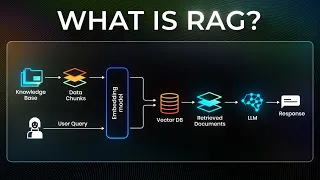
Retrieval Augmented Generation, commonly referred to as RAG, represents a transformative approach to connecting artificial intelligence systems with large document repositories. Traditional AI models like ChatGPT have knowledge cutoffs and cannot access real-time or proprietary company documents without external integration. RAG solves this fundamental limitation by enabling AI assistants to search, retrieve, and understand massive collections of documents dynamically. This capability is particularly valuable for organizations that need their AI systems to work with internal databases, knowledge bases, and document archives while maintaining accuracy and relevance in responses.
Why Traditional Search Methods Fall Short
Conventional search methods rely on keyword matching and simple text similarity, which often fail to capture the semantic meaning behind user queries and documents. When someone searches for "employee benefits policy," a traditional search engine might only find documents containing those exact words, missing related documents about compensation, retirement plans, or healthcare coverage. This limitation becomes critical when dealing with complex, domain-specific documents where synonyms and conceptual relationships matter more than exact word matches. RAG addresses this shortcoming by introducing vector embeddings and semantic understanding into the retrieval process.
The Three-Step RAG Architecture
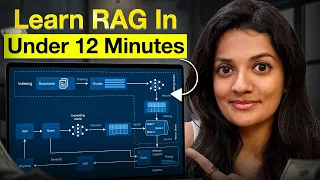
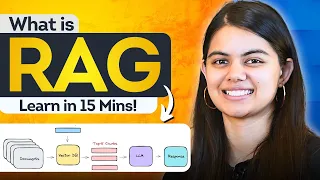
The RAG process consists of three sequential but interconnected steps that work together seamlessly. First, the Retrieval step uses vector embeddings to search through document repositories and identify the most relevant documents based on semantic similarity rather than keyword matching. Second, the Augmentation step takes the retrieved documents and combines them with the original user query to provide context to the AI model. Third, the Generation step uses this enriched context to produce accurate, informed responses grounded in actual company documents rather than relying solely on the model's training data. Understanding this three-part structure is essential for grasping how RAG enables AI systems to reference external knowledge sources effectively.
Vector Embeddings and Semantic Search
Vector embeddings form the technical backbone of RAG systems. Documents and queries are converted into high-dimensional numerical vectors that capture semantic meaning, allowing the system to measure similarity mathematically. Two documents about "customer retention strategies" and "keeping clients satisfied" would have similar vector representations even though they use different words. Semantic search leverages these embeddings to find contextually relevant documents rather than relying on keyword overlap. This approach dramatically improves retrieval quality and enables AI systems to understand nuance, context, and conceptual relationships that traditional full-text search cannot capture.
Critical Chunking Strategies for Success
Before documents enter a RAG system, they must be split into smaller, manageable pieces called chunks. The chunking strategy significantly impacts system performance and accuracy. Different document types require different approaches: technical manuals might be chunked by sections, legal documents by clauses or paragraphs, and emails by individual messages. Chunk size must balance context preservation with computational efficiency. Chunks that are too small lose surrounding context, while chunks that are too large dilute relevance signals. Effective chunking strategies also consider overlap between chunks, ensuring that important information spanning chunk boundaries isn't lost during retrieval.
RAG Calibration and Optimization Techniques
Optimizing RAG systems involves multiple calibration strategies that fine-tune retrieval quality and generation accuracy. These strategies include adjusting embedding models to better capture domain-specific language, tuning similarity thresholds to control which documents are retrieved, implementing reranking to refine retrieval results, and adjusting prompt engineering to provide better instructions to the generation model. RAG calibration is not a one-time process but an ongoing refinement cycle where performance metrics guide improvements. Organizations must monitor how often the system retrieves irrelevant documents, whether chunks provide sufficient context, and whether the generated responses accurately reflect the retrieved information.
Practical Implementation and Deployment
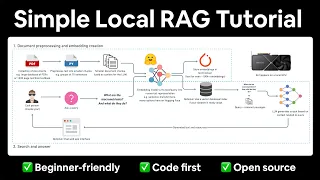
Implementing RAG requires setting up several interconnected components: a vector database to store embeddings, an embedding model to convert documents into vectors, a chunking mechanism to prepare documents, and an LLM capable of generating responses based on retrieved context. Modern RAG systems typically use development environments that integrate these components, allowing teams to experiment with different configurations and strategies. Vector databases like Pinecone, Weaviate, or Milvus provide optimized storage and retrieval at scale. The practical demo component demonstrates these concepts in action, showing how to initialize a vector database, implement chunking strategies, feed documents into the system, perform semantic searches, and build simple web interfaces that expose RAG functionality to end users.
Getting Started with RAG Learning
For beginners looking to master RAG, hands-on experimentation is invaluable. Interactive labs allow learners to test different chunking strategies on real documents, observe how vector embeddings affect search results, and build complete RAG pipelines from scratch. These practical experiences solidify understanding of how retrieval quality impacts generation quality, why certain design choices matter, and how to troubleshoot common issues. Starting with small document sets and gradually scaling to larger repositories helps build intuition about RAG behavior and performance characteristics.
What you will learn
- Understand the three-step RAG process and why it revolutionizes AI document search
- Implement vector embeddings and semantic search for intelligent document retrieval
- Apply chunking strategies tailored to different document types and structures
- Configure and optimize vector databases for production RAG systems
- Build practical RAG applications with working demonstrations
Concepts covered
Technologies used
Chapters 10 markers
- Introduction to RAG
- Why Traditional Search Methods Don't Work
- The RAG Method Explained
- Step 1: Retrieval Process
- Step 2: Augmentation Explained
- Step 3: Generation Process
- Strategies for RAG Calibration
- Demo - Set up Development Environment
- Demo - Initialize Vector Database
- Demo - Semantic Search in Action
Next suggested video
Reviews
No reviews yet. Be the first to rate this lesson.